
Loading article…

ラスク文書(ラスク・ヤン書簡とも呼ばれる)は、1951年8月10日に米国国務次官補(極東担当)のディーン・ラスクが駐米韓国大使の楊有燦に送った公式外交文書である。ラスク文書は米国国務省の交渉姿勢を示している。[ 1 ] [ 2 ] [ 3 ]
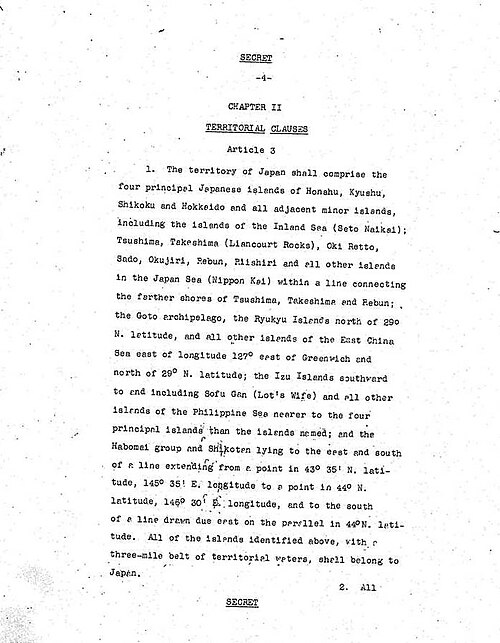

ラスク文書は、アジアにおける第二次世界大戦を正式に終結させることを目的としたサンフランシスコ講和条約の締結に先立ち、韓国、米国、日本の間で交換された一連の文書の一部である(日本は1945年に連合国と休戦協定を締結していた)。条約草案は1949年には既に現れ始めていた(「日本との平和条約草案」参照)。その後数年間、韓国は米国に数多くの要請を行い、米国もそれに対し数多くの外交的回答を送った。ラスク文書はそのうちの一つである。最終的な条約は1952年4月に締結された。
韓国政府から米国政府への3つの要求は以下のとおりである。[ 4 ]
書簡には、交渉の立場として次のように記されている。
Korea had sought an amendment formalizing the date Japan had ceded control of Korea, including several disputed islands as Korean territory, at the point of Japanese acceptance of the Potsdam Declaration, but this was rejected: "The United States Government does not feel that the Treaty should adopt the theory that Japan's acceptance of the Potsdam Declaration on August 9, 1945 constituted a formal or final renunciation of sovereignty by Japan over the areas dealt with in the Declaration."[6]
"As regards the island of Dokdo, otherwise known as Takeshima or Liancourt Rocks, this normally uninhabited rock formation was according to our information never treated as part of Korea and, since about 1905, has been under the jurisdiction of the Oki Islands Branch Office of Shimane Prefecture of Japan. The island does not appear ever before to have been claimed by Korea."[7]
The MacArthur line was to stand only until the conclusion of the Treaty of San Francisco: "the so-called MacArthur line will stand until the treaty comes into force."
However, South Korean President Syngman Rhee disregard it and declared the Syngman Rhee Line and the sovereignty over Dokdo on January 18, 1952, just before the Treaty of San Francisco came into force on April 28, 1952.
Japan has no obligation to return the Korean-origin properties of persons in Japan: "there would seem to be no necessity to oblige Japan to return the property of persons in Japan of Korean origin since such property was not sequestered or Otherwise interfered with by the Japanese Government during the war. In view of the fact that such persons had the status of Japanese"
"Japan recognizes the validity of dispositions of property of Japan and Japanese nationals made by or pursuant to directives of United States Military Government in any of the areas referred to in Article 2 and 3."
South Korea claimed an island of uncertain location in 1951, along with Liancourt Rocks, Jeju and other islands.
韓国の楊有燦大使は、パラン島(韓国語: 파랑도、漢字:波浪島)を日本の放棄地に含めるよう米国国務長官に要請した。[ 8 ]ジョン・フォスター・ダレス米国大使がパラン島とリアンクール岩礁の位置について尋ねたところ、韓国大使館の筆頭書記官である杰晏漢は、それらは鬱陵島近くの日本海(東海)にあると答えた。ボッグス氏は「ワシントンであらゆる手段を尽くした」が、パラン島を特定できなかった。[ 9 ]その間、韓国はパラン島に対する領有権主張を取り下げた。[ 10 ]
 ウィキメディア・コモンズにあるラスク文書関連メディア
 ウィキソースにある1951年のラスク覚書に関連する作品