
Loading article…
新車アセスメントプログラム(またはプログラム、NCAP)は、さまざまな安全上の脅威に対する性能について、新型自動車の設計を評価することを任務とする政府の自動車安全プログラムです。
最初の NCAP は 1979 年に米国国家道路交通安全局によって作成されました。このプログラムは、1972 年の自動車情報およびコスト削減法の第 2 条に対応して設立され、メーカーがより安全な車両を製造し、消費者がそれを購入することを奨励しています。時間の経過とともに、当局は評価プログラムを追加し、テスト結果へのアクセスを容易にし、消費者が理解しやすいように情報の形式を改訂することでプログラムを改善しました。[ 1 ] NHTSA は、このプログラムがメーカーに一貫して高い評価を得る車両を製造するよう影響を与えたと主張しています。[ 1 ]
初の標準化された時速35 マイルの前面衝突試験は1979年5月21日に実施され、最初の結果は同年10月15日に発表された。同機関は、連邦自動車安全基準208(「乗員衝突保護」)に基づく前面衝突試験プロトコルを確立したが、前面4 NCAP試験は、 FMVSS No. 208で要求されている時速48km (30マイル)ではなく、時速56km (35マイル)で実施される。
The European program, Euro NCAP, was founded in 1997 by the Transport Research Laboratory for the UK Department for Transport and backed by several European governments, as well as by the European Union.[2] Based in Brussels, Belgium, the European program was modeled on the American program.[1] Other areas with similar programs include Australia and New Zealand with ANCAP,[3] Latin America with Latin NCAP, China with C-NCAP[4] and India with Bharat NCAP.[5] Global NCAP usually covers crash test for regions which are underserved and doesn't have a proper crash testing procedure. It conducts crash tests in South Africa, under its Safer Cars for Africa project. It used to conduct crash testing cars for Indian Market under its "Safer Cars for India" initiative[6] but now those testing role have been taken over by Bharat NCAP for Indian market. In Russia, the AutoReview Car Assessment Program (ARCAP) has been conducting consumer crash tests but is not recognized as an NCAP and often uses subjective evaluation methods on a case-to-case basis.[7]
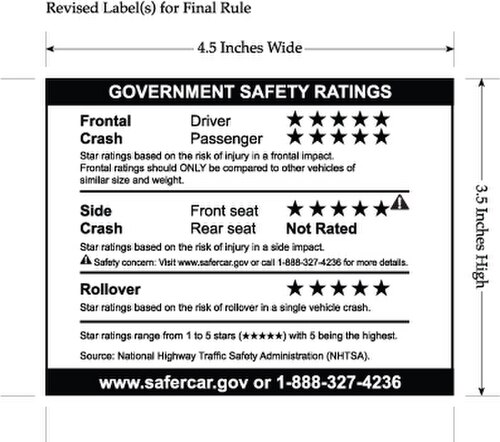
In the 2000s, the American agency sought to improve the dissemination of NCAP ratings and as a result of the Safe, Accountable, Flexible, Efficient Transportation Equity Act: A Legacy for Users (SAFETEA–LU). It did so by issuing a Final Rule requiring manufacturers to place NCAP star ratings on the Monroney sticker (automobile price sticker). The rule has a September 1, 2007 compliance date.[8]
In 2022, under the Infrastructure Law and reacting to recommendations from the Alliance for Automotive Innovation, the American agency introduced a new proposal for updating its version of NCAP. The proposal included four new technologies in driver assistance - Blind spot monitoring and intervention, electronic lane-keeping, and computerized emergency braking systems protecting pedestrians. This was the first time NCAP addressed the safety of individuals outside of a vehicle. The proposal also makes provision for a 10-year road map to keep up with the latest innovation and technology.[9]
2022年6月、米国NCAPは国家運輸安全委員会から批判を受けた。同委員会は、米国人が利用している5つ星安全評価プログラムは、衝突回避システムやその他の技術が含まれていないため「消費者を失望させている」と考えている。NTSBによると、欧州のEuro NCAPと比較すると、NHTSAの評価システムには、前方衝突警報システム、自動緊急ブレーキシステム、車線逸脱警報システム、ドライバー監視システム、歩行者や自転車利用者も保護するように設計されたその他のアクティブおよびパッシブコンポーネントが欠けている。[ 10 ]
NCAPには以下のような種類があります。
今日、安全とは衝突安全性だけでなく、衝突回避もますます重要になっています。(…)しかし、NTSBが何十年も推奨してきたこれらの命を守る技術の多くは、5つ星評価プログラムには含まれていません。現在利用可能な衝突防止技術を一切搭載していない米国の車が最高評価を得られるのはどういうことでしょうか。それは容認できません。(…)
欧州連合が
今年義務化し始めた技術、Euro NCAPが来年から評価を開始する技術、そしてNTSBが何年も前から義務化を推奨してきた技術は、NHTSAによってようやく検討され始めたところです。NHTSAが安全技術の出現と発展に追いつけない限り、NCAPプログラムは消費者に情報を提供するという目的を果たすことはできません。