
Loading article…
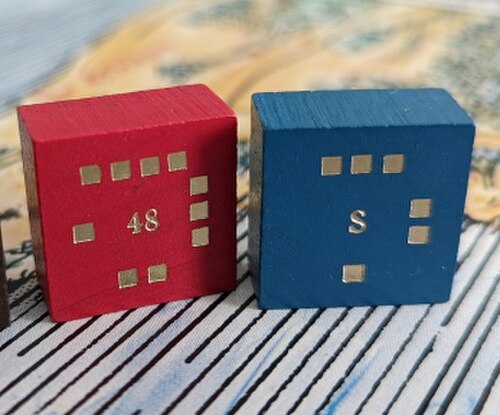
ブロックウォーゲームとは、軍事ユニットを厚紙のカウンターや金属/プラスチック製のミニチュアの代わりに木製のブロックで表現するボードウォーゲームのことです。
ブロックウォーゲームでは、木製のブロックを使ってユニットを表します。これらのブロックは通常正方形で、ラベル付きの面とラベルなしの面があり、ラベル付きの面を所有プレイヤーに向けて横向きに置けるだけの厚みがあります。所有プレイヤーはユニットの詳細(例えば、ユニットの識別情報、攻撃力、防御力、移動力など)を容易に確認できますが、対戦相手はユニットの正確な性質を把握できません。対戦相手は敵の部隊の位置は把握できますが、部隊の種類や質を秘密にすることで、戦場の霧を再現しています。
ブロックピースには、中央に主要な情報が表示され、周囲に一連の数字(またはドット)が配置されていることがよくあります。これは、ユニットの現在の強さを「段階的減少」システム(戦闘中にダメージを受けると、ユニットの強さが段階的に減少するシステム)で示すためです。ユニットが無傷のときは、最大の数字が12時の方向に表示されます。ユニットがダメージを受けると、プレイヤーはブロックを反時計回りに回し、次に大きな数字が12時の方向に表示されるようにします。ブロック上部のドットの数が、ユニットの現在の強さを示します。これはユニットの強さがゼロになるまで続き、ゼロになるとユニットはゲームから除外されます。
あるいは、一部のブロックウォーゲームでは、プレイヤーは損傷したユニットを表すブロックをボードから取り除き、より強度の低いブロックと交換する必要がある。

2人のプレイヤーのうち1人にしか見えない駒というアイデアは、1908年に発売されたゲーム「ラタック」 (ストラテゴの最初のバージョン)に遡ります。初期のストラテゴの駒は厚紙製でしたが、第二次世界大戦後に木製に置き換えられました(現在、ストラテゴの駒はプラスチック製です)。しかし、ストラテゴはブロックウォーゲームの直接的なインスピレーション源ではありませんでした。
In 1972, Lance Gutteridge of Gamma Two Games originally planned on using six-sided dice to represent pieces and to provide for step reduction in combat strength. The high cost of dice led him to decide to instead use embossed wooden blocks showing 2, 3 or 4 steps in combat strength.[1] The first such block wargame was Quebec 1759, depicting the campaign surrounding the Battle of the Plains of Abraham.[2] Gamma Two Games later produced the block wargames War of 1812, simulating the war of that name, and Napoleon, simulating the campaign leading up to the Battle of Waterloo. In 1982, Gamma Two changed its name to Columbia Games.[2]
Through the 1980s and 1990s Columbia Games was practically the sole publisher of block wargames. Their releases during this time included Rommel in the Desert, covering World War II's North Africa campaign; EastFront and its sequels, covering the European theater of World War II at the corps level; and Bobby Lee and Sam Grant, covering the Western theater of the American Civil War. The only significant change was to replace the relatively expensive embossed wooden blocks used in the old Gamma Two Games with plain plastic blocks. Each game then comes with a sheet of stickers to be affixed to the blocks.[2]
Block wargames are enjoying a minor resurgence. Columbia Games' Hammer of the Scots by designer Jerry Taylor has been well received. His next title, Crusader Rex also fared well by many. Jerry Taylor recently released another block game based on the War of the Roses. GMT Games entered the block wargame market in 2003 with the release of Europe Engulfed, a simulation of the entire ETO. A sister game, Asia Engulfed, was released in 2007, using blocks to represent fleets as well as ground forces.
GMTは、ブロックウォーゲームシリーズ「コマンド・アンド・カラーズ:エンシェント」もリリースし、広く好評を博しました。ただし、このシリーズは、ユニットのブロックの両面に識別マークが付いているため、従来の「ブロックウォーゲーム」の定義には当てはまりません。これにより、ほとんどのブロックウォーゲームに見られる「戦場の霧」の要素が排除されています。シモンズゲームズは、革新的な「ボナパルト・アット・マレンゴ」を出版し、2005年にゲームズマガジン誌の最優秀歴史シミュレーション賞にノミネートされました。このゲームには、戦闘マップで使用されるシンボルを彷彿とさせる、独特な長いブロックが登場します。
VentoNuovo Gamesは2011年以来、新しい論理アルゴリズムと超詳細な地形図の作成により、ブロックウォーゲーム分野を近代化してきました。現在、14タイトルをリリースしており、この分野で最も活発な企業となっています。
『コマンド』の創刊号で、ビル・ストーンはブロックを使うというアイデアを「悪いアイデアではないが、駒の密度が高いゲームで使用するには扱いにくい」と評した。[ 3 ]