
Loading article…
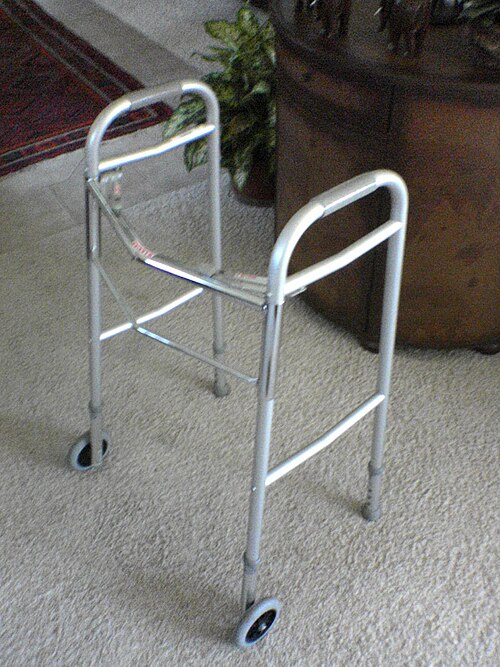
A walker (North American English) or walking frame (British English) is a device that gives support to maintain balance or stability while walking, most commonly due to age-related mobility disability, including frailty. Another common equivalent term for a walker is a Zimmer(frame), a genericised trademark from Zimmer Biomet, a major manufacturer of such devices and joint replacement parts. Walking frames have two front wheels, and there are also wheeled walkers available having three or four wheels, also known as rollators.
Walkers started appearing in the early 1950s. The first US patent was awarded in 1953 to William Cribbes Robb, of Stretford, UK, for a device called "walking aid", which had been filed with the British patent office in August 1949.[1] Two variants with wheels were both awarded US patents in May 1957,[2][3] and the first non-wheeled design that was called a "walker" was patented in 1965 by Elmer F. Ries of Cincinnati, Ohio.[4] The first walker to resemble modern walkers was patented in 1970 by Alfred A. Smith of Van Nuys, California.[5]
The basic design consists of a lightweight frame that is about waist high, approximately 12 inches (30 cm) deep and slightly wider than the user. Walkers are also available in other sizes such as pediatric (for children) or bariatric (for obese persons). Modern walkers are height adjustable and should be set at a height that is comfortable for the user, but will allow the user to maintain a slight bend in their arms. This bend is needed to allow for proper blood circulation through the arms as the walker is used. The front two legs of the walker may or may not have wheels attached, depending on the strength and abilities of the person using it. It is also common to see caster wheels or glides on the back legs of a walker with wheels on the front; additionally felt products adapted to glide with the legs such as adhesive feet, along with tennis balls with holes cut into them to place them onto the legs are also utilized on surfaces such as hardwood, epoxy and linoleum flooring common to institutions.[6]

歩行器は、歩行者の前面と側面をフレームで囲み、両手でフレーム上部の側面をつかむことで、歩行者を支えます。従来は、歩行器を持ち上げて使用者の少し前方に置き、使用者がそこまで歩いて行き、同じ動作を繰り返していました。しかし、車輪やグライド(滑り止め)を使用することで、歩行器を持ち上げる代わりに押して移動させることができます。これにより、歩行器を持ち上げる際に腕を使う必要がなくなるため、歩行器の使用が容易になります。これは、腕力が弱い方にとって特に有益です。
歩行器は、脚や背中の怪我から回復中の人によく使われます。また、歩行に問題のある人や、軽度のバランス障害のある人にもよく使われます。
また、片手または片腕の器用さが制限されている、あるいは全くない人向けに設計された、従来の歩行器の約半分の大きさのヘミウォーカーという歩行器もあります。これらの歩行器は、四点杖(地面に接する点が1点ではなく4点ある杖)よりも安定していますが、従来の歩行器を使用できる人にとっては、それほど推奨されるものではありません。

歩行補助杖と歩行器の間のギャップを埋めるために設計されたハイブリッド型杖[ 7 ]が2012年に導入されました。このハイブリッド型杖は、杖にはない横方向(左右方向)のサポートを提供する2本の脚を備えています。歩行器と同様に、使用者の前方で両手を使って使用でき、杖に比べてサポートレベルが向上しています。前方と側面で片手または両手で使用できるように調整でき、階段昇降補助具としても使用できます。このハイブリッド型杖は、通常4本の脚を持ち、両手で4方向のサポートを提供する歩行器に取って代わるようには設計されていません。
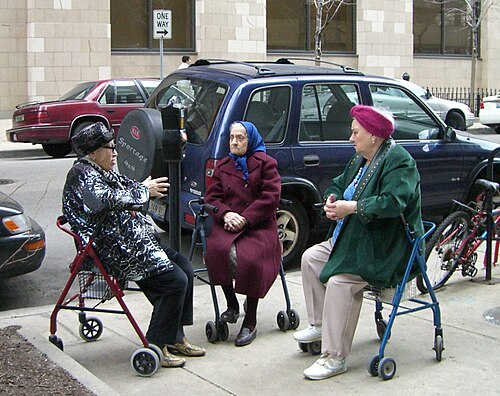
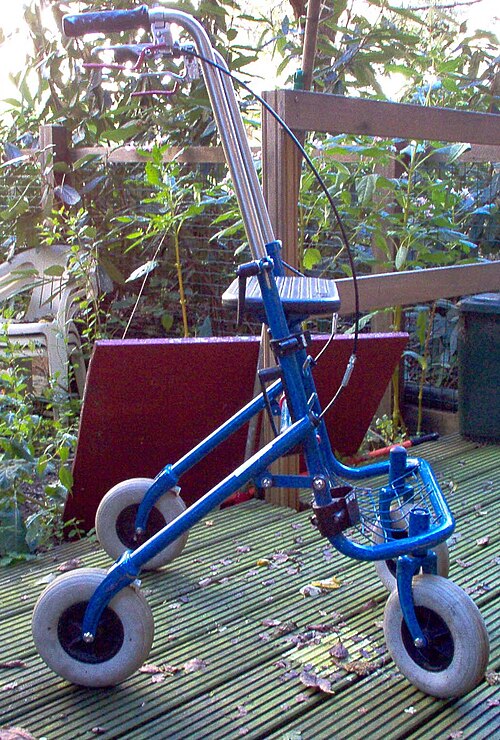
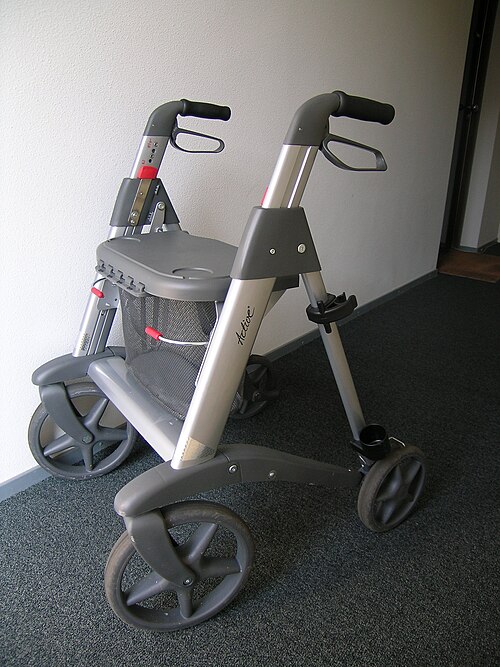
歩行器とは異なるアプローチとして、スウェーデン人のアイナ・ウィファルクが1978年に発明した、車輪付き歩行器とも呼ばれるローレーターがある。ウィファルクはポリオを患っていた。[ 8 ] [ 9 ]元々はブランド名だった「ローレーター」は、多くの国で車輪付き歩行器の一般名称となり、ヨーロッパのいくつかの国では最も一般的なタイプの歩行器となっている。
歩行器は、3つまたは4つの大きな車輪、ハンドルバー、そして必要に応じて立ち止まって休憩できる内蔵シートを備えたフレームで構成されています。歩行器には、買い物かごが装備されていることもよくあります。歩行器は、一般的に車輪付きの従来の歩行器よりも高度な機能を備えています。高さ調節が可能で軽量でありながら、従来の歩行器よりも頑丈です。ハンドルバーにはハンドブレーキが装備されており、持ち上げたり押し下げたりすることで歩行器を瞬時に停止させることができます。ブレーキは歩行器の操作にも使用できます。片側にブレーキをかけながら歩行器をその方向に向けることで、より小回りの利く旋回半径を実現できます。
2000年代の研究では、歩行器の使用が増加していることが分かりました。これは「若者の間で歩行の新たな基準を打ち立てている」30代の若者によるものです。研究者らは、これが現在歩行器の使用に伴う偏見を軽減するのに役立つ可能性があると結論付けています。[ 10 ]
Wifalkの歩行器のノルウェー製バージョンは、2011年のレッドドットデザイン賞の「ライフサイエンスと医学」部門を受賞した。[ 9 ] 歩行補助具に関する欧州規格EN ISO 11199-2:2005は、歩行器と歩行フレームに適用される。

このタイプの歩行器は、犬に支えと安定性を提供しながら、後ろ足に部分的に頼り、後ろ足を使い続けることを可能にします。後ろ足に歩行障害のある犬(または不安定な犬)に適しています。また、後ろ足の運動を促し、残っているわずかな歩行能力を維持したり、場合によっては改善したりする効果も期待できます。