
Loading article…
トリアラ トゥレアール トリアリ | |
|---|---|
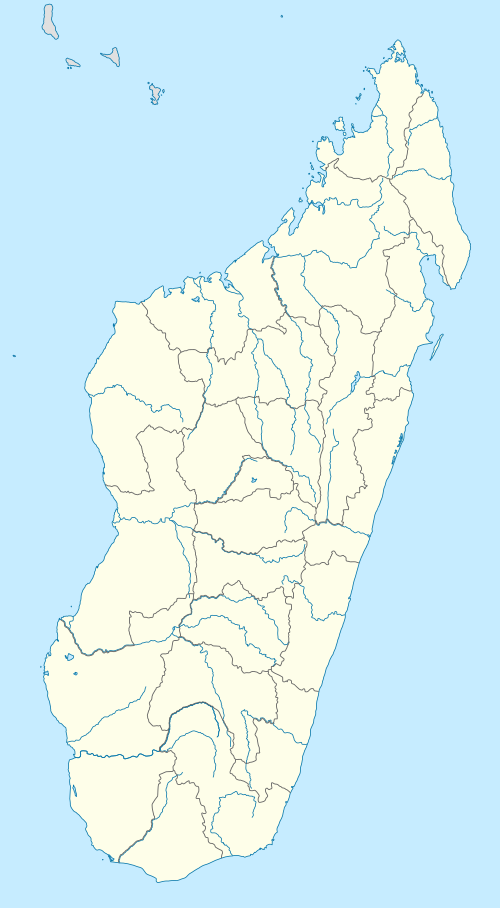  トリアラ マダガスカルのトゥリアラの位置 | |
| 座標:南緯23度21分 東経43度40分/南緯23.350度 東経43.667度/ -23.350; 43.667 | |
| 国 |  マダガスカル マダガスカル |
| 地域 | アツィモ=アンドレファナ |
| 政府 | |
| • 生徒会長 | リドール・ソロンドラザ |
| エリア | |
• 合計 | 32.1 平方キロメートル(12.4平方 マイル ) |
| 人口 (2018年国勢調査) | |
• 合計 | 168,756 |
| • 密度 | 5,260人/平方キロメートル( 13,600人/平方 マイル) |
| 郵便番号 | 601 |
トゥリアラ(トゥリアリ、[ tuliˈarʲ ]、旧名 トゥレア)としても知られる、マダガスカル南部の都市です。首都アンタナナリボの南西936 km に位置するアツィモ アンドレファナ地域の首都です。
現在の地名の綴りは1970年代に採用されたもので、マダガスカル語の正書法を反映している。植民地時代にフランス語の綴りが付けられていた多くの地名は、1960年のマダガスカル独立後に変更された。
この都市の人口は2018年時点で168,758人である。[ 2 ]港町として、サイザル麻、石鹸、麻、綿、米、ピーナッツなどの商品の主要な輸出入拠点としての役割を果たしている。

17世紀、フランスの海賊たちが南回帰線近くのセントオーガスティン湾に上陸し、商業関係を維持するためにこの都市を建設した。 都市が本格的に発展したのは、1897年以降の植民地時代になってからである。ジョゼフ・ガリエニの尽力により、それまでノシヴェ島に孤立していたフランスの行政機関が移転し、地域の中核都市として確立された。トゥリアラは、広い大通りと公共の記念碑が点在する、碁盤の目状の街路網に沿って発展した。
トリアラは、犬種コトン・ド・テュレアールの原産地でもある。
トゥリアラでは過去20年間で人口が急増しており、これは農村部からの人口流出により20万人以上の住民が地域の都市部に移住してきたためである。
遊牧漁民であるヴェゾ族は、この地域の先住民族である。今日では、南部(マハファレ、マシコロ、アンタンドロイ)からの移住者が大多数を占め、都市人口の半数以上を占めている。さらに、他の都市地域からの移住者も加わり、彼らは政府機関や民間企業で要職に就いている。
トリアラ大聖堂は、ローマ・カトリック教会のトリアラ大司教区の司教座であり、同大司教区は国内に5つある大司教区の1つである。元々は1957年からトゥリアール司教区と呼ばれていたが、1989年に市とともに改名され、2003年に大司教区に昇格した。


地域の文化的な見どころは以下のとおりです。
The University of Toliara is historically the oldest center for higher education, founded in 1971 after the decentralization of the University of Madagascar center. The university campus is located in Maninday 5 km east of the city, and teaches Humanities and Social Science, Science, Philosophy, and Management.
The Fisheries and Marine Sciences Institute (IHSM) welcomes students from diverse backgrounds, and offers advanced training in fisheries, aquaculture, and the marine and coastal environment.
Toliara has a Technical School and two grammar schools (Lycée Laurent Botokeky and Antaninarenina High School), private and religious schools such as Sacred Heart College, Tsianaloke Mahavatse, and the School of Notre Dame, and a French international school, Collège Etienne de Flacourt, which serves école primaire (primary school) and collège.[3]
The port played a key role during the "boom corn" years in the 1980s and 90s. Today, the arrival of migrants contributing to agricultural production (maize, cassava and rice) and livestock (cattle and goats) supplying the city markets with food, has contributed to the development of small informal businesses: particularly among the Mahafale and Masikoro communities. The city specializes in the import and export of various products including sisal, cotton, rice, peanuts and soap. Production of sea salt thrives, from salt marshes and landscaped places in coastal areas.
The Bay of Toliara houses one of Madagascar's oil exploration sites. The sea floor is rich in minerals gemstones (about 200 km to the north lies the Ilakaka sapphire deposit has operated since 1999) and ground salt. More recently, Canadian companies begin operation of the ilmenite in the region of Tolanaro. Beyond this mining and production, the industrial sector has declined in recent decades.
Tourism is a promising sector, thanks to the climate and natural assets of the hinterland (Ifaty, Anakao, Saint Augustin). Calm shallow seas and shallow support scuba diving, and Toliara remains a main destination for tours to southern Madagascar.
The Toliara Sands project, renamed Base Toliara, seeks to exploit ilmenite but encounters strong opposition despite an investment of 700 million dollars.
トリアラは、モザンビーク海峡の南回帰線付近に位置する、砂丘とマングローブに囲まれた広大な海岸平野にあります。近くには、 長さ18km、 幅3kmのバリアリーフ(グレートリーフ)があります。海岸線は、緩やかに海に向かって傾斜する大陸棚に沿って、水中ビーチへと広がっています。北にはフィヘレナナデルタが広がっています。
トリアラは、年間降水量が400mm未満と乾燥しており(ケッペンの気候区分BWh )、平均気温25.3℃と暑い気候であることから、「太陽の街」という愛称で呼ばれています。この街は常に強い卓越風、ツィオ・カティモ(「南風」)が吹き抜けています。
植民地時代の遺産は、建築物や都市景観に今もなお色濃く残っている。都市の発展を促進するため、2003年には大規模な道路工事や開発事業が実施された。
ミツィンジョ・ベタニメナ大学病院センター(CHU Mitsinjo Betanimena)は、市中心部近くのタナンバオ地区に位置しています。もう一つの私立医療施設であるセント・ルークス・クリニックは、サンフィリー地区の空港へ向かう道路沿いにあります。
トゥリアラ空港は市内に位置し、 エア・マダガスカルが定期便を運航している。


23°21′S43°40′E / 23.350°S 43.667°E / -23.350; 43.667