
Loading article…
自己認識生活の質尺度[ 1 ] [ 2 ]は、自己認識生活の質(SPQL)[ 3 ]の包括的な理論に基づいた心理学的評価ツールであり、健康関連および健康以外の幸福の側面を多面的に測定します。[ 4 ]この尺度は、一部の臨床集団における生活の質をモニタリングするためのツールとして選ばれており、例えば、HIVと共に生きる女性のためのポジティブリー・サウンド・ネットワークで採用されています。[ 5 ]
精神疾患の改善は、個人の生活の複数の領域に影響を与える可能性があり、それは包括的な測定によってのみ捉えることができます。例えば、恐怖症の治療は恐怖心(精神健康指標)を軽減し、それが社会関係(社会関係指標)の改善につながり、ひいては仕事のパフォーマンス向上、そして給与の増加(経済指標)につながる可能性があります。したがって、治療(例えば恐怖症の治療)のあらゆる影響を検出するためには、個人の生活の複数の領域にわたる包括的な測定が必要です。SPQL尺度は、このような包括的な測定を提供することができます。
この尺度は電子形式で設計されています。ソフトウェアがスコアを自動的に計算するため、高度な定量化手法が可能になります。自動計算と定量化手法により、SPQLを多角的に評価するための包括的なアプローチが可能になりました。この多角的なアプローチにより、メンタルヘルス介入の効果を(事前・事後テストを通じて)包括的に評価することができました。
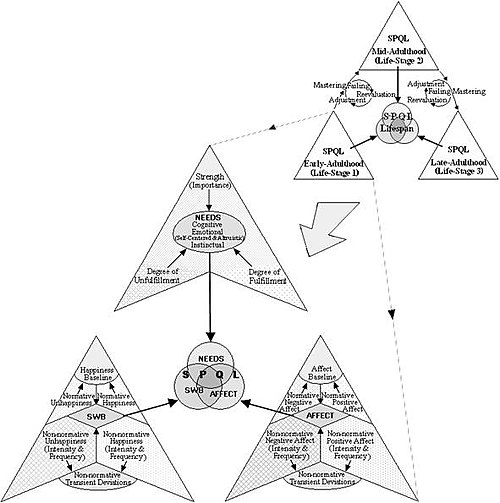
この尺度は、(a)主観的幸福感、(b)発達段階、(c)人間のニーズの様々なカテゴリー、(d)生活の質、(e)主観的評価プロセスといった既存の理論を統合して作成されました。尺度は、主観的幸福感、肯定的および否定的感情、ニーズの充足という3つの軸で構成されています。モデル図は下記をご覧ください。
The scale can (a) identify possible side effects of psychiatric or psychological interventions which could occur in multiple domains of an individual's life, (b) detect the occurrence of relapses, (c) assist in evaluating the progress of recovery, (d) measure the effects of various non-normative positive and negative events (e.g., divorce, promotion at work, becoming a parent) on an individual's life as a whole and trace the course of their development, (e) evaluate an individual's SPQL throughout the lifespan, (f) predict depression, anxiety, and mood, and (g) assess the effectiveness of interventions intended to enhance well-being and improve quality of life on an individual level.
This scale could be used by individual mental health professionals to evaluate the progress of treatment. This is useful for clients as well because they themselves are able to compare their initial scores with scores after intervention. Because the scale is available online, clients are able to complete the questionnaire outside of the therapy sessions. The scale also could be used in medical settings to assess how medical treatment affects a patient's life overall and in specific aspects over time, as well as allow detecting psychological side effects. The scale could be of use to insurers because it would help in evaluating the effectiveness of mental health interventions.
It is safe to postulate that all people want to have a good life. Although the meaning of “a good life” may vary from culture to culture and from individual to individual, this meaning revolves around the same aspects of life across cultures. What actually varies between cultures and individuals is the availability of certain aspects of a good life, the subjective significance people assign to these aspects, and the way people evaluate these aspects of a good life.
Everything we do or do not do, wish or do not wish, and have or do not have has an explicit or an implicit relevance to how good or not good we perceive our lives to be. Because the preference for a good life over a bad life underlies all facets of our lives, understanding what constitutes and influences a good life on an individual level has a significant value for all people.
During the past several decades researchers investigated the concept of “the good life” based on three theoretical approaches:
The comprehensive scale of the good life, the Self-Perceived Quality of Life (SPQL) scale, overcame the limitations of prior approaches by integrating measurements of SWB, QOL, and functionality on an individual level, and by utilizing innovative quantification methods.[14][15] The scale focused on how individuals evaluate their lives and compare these measurements with the average good life of others. The SPQL scale includes well-being, emotions, and physical and mental health indices. The SPQL scale has implications for evaluating the effectiveness of a wide range of interventions intended to improve mental health and well-being.
The SPQL construct consists of three axes, each compounded from several variables:
Because fluctuations within SPQL are likely to occur over time, a single-occasion measurement will not provide a comprehensive assessment.[16][17] In order to capture a more comprehensive picture of SPQL, the SWB variable (axis) was measured retrospectively throughout three major life stages of adult human development: Early-adulthood, mid-adulthood, and late-adulthood (see SPQL model diagram).

As people approach a life stage in their development, they face developmental tasks that they need to master in order for the transition to the next life stage to be successful.[18][19] The cycle of transition from one life stage to another is marked by three phases:
To a lesser degree, cycles of transitions occur continually within major life stages on annual and even on daily bases.
生涯にわたる主観的幸福感(SWB)の曲線は、個人の幸福な人生の経験を反映する。理想的には、各ライフステージにおいてSPQLの3つの軸すべてを評価すべきである。しかし、そうすると質問票が長くなりすぎる。SPQL尺度は各ライフステージにおいて1つのSPQL軸(SWB)しか測定しないが、開発された理論的枠組みでは、主要なライフステージ全体を通してSPQLの3つの軸すべてを評価することについて議論している。したがって、この枠組みは、この目標を達成する次期バージョンの尺度の開発を支援することができる。今後の研究では、評価する尺度項目の数を減らし、主要なライフステージ全体を通してSPQLの3つの軸すべてを評価する質問を含める可能性を探ることができる。
参加者の 3 つの SPQL 軸のそれぞれに対する質問票への回答 (付録を参照) は、尺度の心理測定学的妥当性の検証と、良い生活を測定することを可能にする定量的分析のためのデータを提供した。最初の 2 つの軸の理論的枠組みは、SWB、肯定的感情と否定的感情、および気分の既存の理論に基づいている。[ 9 ] [ 20 ] [ 10 ] [ 21 ] 3 番目の軸の理論的枠組みは、異なるニーズのカテゴリーを概念的に区別する理論に基づいている。[ 22 ] [ 23 ]異なるニーズのカテゴリーは、3 番目の軸を構成する 4 つの一般的なニーズのカテゴリーに分類される。社会的、心理的、および健康要因にわたる個人の機能レベルの測定は、3 番目の軸に統合されている。この統合は、これらの要因にわたる最適な機能に対する個人のニーズの強さと充足度を評価することによって達成された。
主観的幸福感 (SWB) のベースラインは、心理的および生物学的恒常性によって維持されます。[ 24 ] [ 25 ]全体的な幸福感の測定により、SWB ベースラインが決定されました。SWB ベースラインが高いほど、SPQL も高くなります。人生でより多くの肯定的かつ否定的かつ強い経験 (つまり、一時的な逸脱) を経験した人は、SPQL が高くなります。強い経験は、時間の経過とともに SWB ベースラインから逸脱する、非規範的な一時的な主観的幸福感/不幸感の頻度と強度を測定することによって評価されました。
人生において、肯定的感情体験(SAE)が多く、否定的感情体験が少ない人(つまり、一時的な感情の変動が少ない人)は、SPQLスコアが高い。全体的なSAEを測定するために、肯定的SAEと否定的SAEの平均値が用いられた。
SWBのスコアが同じ人でも、客観的な生活状況が同じであっても、生活水準の評価は異なる場合があります。したがって、自己認識QOLは異なる場合があります。そのため、SPQLのより正確な測定を捉えるために、生活状況に関する幅広い人間のニーズと好みの強さと充足度を評価しました。しかし、感じられるニーズは、人が持つ可能性のあるニーズのすべてではありません。[ 22 ]ニーズが満たされている場合、全体的な幸福の観点から重要度の低い満たされていないニーズほど強く感じられない可能性があります。したがって、ある時点でニーズが強く感じられることは、その時点で満たされているために強く感じられない、またはまったく感じられない他のニーズよりも、全体的なSPQLに大きく貢献していることを必ずしも示すものではありません。したがって、個人の好みとニーズの強さは、「このニーズの充足は、あなたの全体的な幸福にとってどれくらい重要ですか?」などの質問によって評価されただけではありません。しかし、「もしこのニーズが満たされなかったら、あなたの全体的な幸福感にどのような影響があるだろうか?」といった質問も投げかけられます。
軸IIIのニーズ充足の概念モデル。ニーズ充足を測定するために、人間の幅広いニーズが、(a) 認知発達と道徳発達の対応する段階に依存する、(b) 自己概念の主要な構成要素を構成する、(c) 解剖学的脳領域の異なるクラスターにおける神経活動に対応する、( 29 ) 概念的に区別される4つのカテゴリーに分類されました。ニーズの4つのカテゴリーに関連する神経活動には、同じ解剖学的脳領域が異なる方法で関与することがあるからです。そのため、関連するプロセスにおける優位性、および優位領域の時系列的な成熟に基づいて、関与する脳領域が区別されます。
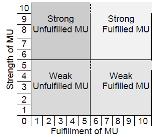
SPQL理論によれば、個人の動機は4つのニーズのカテゴリーの固有の集合から生じるため、これら4つのカテゴリーは個人の動機づけフレームワーク(MF)を構成すると提案されている。以下の議論では、異なる好みやニーズを動機づけ単位(MU)と呼ぶ。動機づけ単位には、SPQLに対するMUの重要性(強さ)と充足度の2つの側面がある。動機づけ単位(MU)の強さは、MUの充足または不充足がSWBベースラインを歪める能力を評価することによって決定された。