
Loading article…
スウェーデン議会(スウェーデン語: Riksens ständer、非公式にはståndsriksdagen )は、スウェーデンの諸身分が組織されていた当時の名称である。1866年に解散するまで、この機関は国王に次ぐスウェーデンにおける最高権力機関であった。それは、歴史的にスウェーデン社会の区分線であった4つの身分からなる議会であった。
第四身分であるボンデスタンデットの存在は、ヨーロッパではほとんど類例のないスウェーデン王国の特異性である。しかし、英語のpeasantという単語は、英語で一般的に定義されるような農民全体を含むものではないため、正確な翻訳とは言えない。小作人、下宿人、季節労働者といった土地を持たない、あるいは半土地を持つ人々は含まれておらず、スウェーデンのbönder (農民)の3つのカテゴリーのうち、含まれていたのは2つだけであった。それは、自分の土地を所有し課税されていたヨーマンであるskattebönder (「課税農民」)と、王室所有の土地を耕作していたkronobönder(「王室農民」または「王室の農民」)である。 3番目のグループである「貴族の農民」(「貴族/郷士」)は、貴族が所有する土地を耕作していたが、彼らは地主によって代表されていると考えられていたため、代表されなかった。
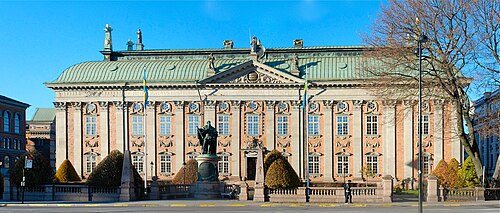
1435年にアルボーガで開催された会議は、一般的に最初の国会と考えられているが、第四身分である農民がそこに代表されていたという証拠はない。
The constitution of 1809 divided the powers of government between the monarch and the Riksdag of the Estates, and after 1866 between the monarch and the new Riksdag. In 1866 all the Estates voted in favor of dissolution and at the same time to constitute a new assembly, Sveriges Riksdag. The four former estates were abolished. The House of Nobility (Swedish: Riddarhuset) remained as a quasi-official representation of the Swedish nobility until 2003. Although the Nobility remains as a legal entity it is no longer an entity of public law but merely a private association. All Noble privileges have been abolished. However, a number of entailed properties (fidekomisser) remain to be commuted (that is, turned into limited liability companies). The modern Centre Party, which grew out of the Swedish farmers' movement, could be construed as a modern representation with a traditional bond to the Estate of the Farmers.
Following the Finnish War in 1809, Sweden ceded its eastmost provinces to the Russian Empire. Comprising much of present-day Finland, these became a Grand Duchy under the Emperor, but the political institutions were kept practically intact. The Finnish estates assembled in 1809 at Porvoo to confirm the change in their allegiance. This Diet of Finland followed the forms of the Swedish Riksdag, being the legislative body of the new autonomous region. However, during the reigns of Alexander I and Nicholas I it was not assembled and no new legislation was enacted. The diet was next assembled by tsar Alexander II in 1863, due to the need to modernize the laws. After this the Diet met regularly until 1905, when it passed an act forming a new unicameral parliament. That assembly has been Finland's legislative body since then. The Finnish House of Nobility (Finnish: Ritarihuone; Swedish: Riddarhuset) carries on the tradition of the Estate of Nobility, but no new families have been ennobled since 1906.