
Loading article…
アイルランドの地方議会は、 2015年に現在の形態となった。地方議会は、1991年地方自治法(2014年地方自治改革法により改正)に基づいて設立された。この法律の下で、地方議会には主に2つの機能がある。1つは公共サービスの提供の調整を促進すること、もう1つは地域における欧州構造投資基金の運用状況を監視することである。
地域議会は、1991年地方自治法に基づいて設立され、1994年に発足した地域当局に取って代わる組織である。1999年から2014年までは、地域当局の上位組織として2つの地域議会が存在した。
2014 年地方自治改革法による 1991 年地方自治法の改正に伴い、2014 年 6 月に地方自治体は廃止され、2 つの地方議会に置き換えられました。[ 1 ] [ 2 ]さらに調整が行われ、2015 年 1 月 1 日からは、それぞれ戦略計画委員会に分かれた 3 つの地方議会ができました。[ 3 ] [ 4 ]アイルランドには3 つの地域があり、それぞれがNUTS 2 統計地域です。地域は、NUTS 3 統計地域である戦略計画区域 (SPA) に分割され、これは地方自治体制度の下での以前の地域とほぼ一致します。[ 5 ] [ 6 ]
地域議会の議員は、当該地域の地方自治体の選出議員の中から指名される。
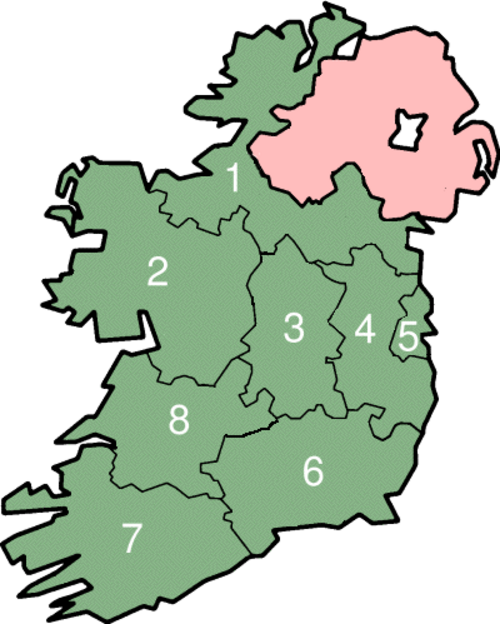
地域当局は1994年に設立された。[ 8 ] 1999年には、この構造に地域議会が追加されて補完された。[ 9 ]
The financing of the activities of the Regional Authorities was largely borne by their constituent local authorities. To assist the Regional Authority in undertaking its functions, each has an Operational Committee and an EU Operational Committee. The Operational Committee is chaired by the Cathaoirleach (Chairperson) of the Regional Authority and is composed of senior management from the constituent local authorities and other relevant public sector agencies operating in the region. It helps prepare the work of the Regional Authority and assists and advises it on matters relating to its functions. Also, each Regional Authority has a designated city/county manager (chief executive of a local authority) from one of its local authorities to further enhance the linkages between the local authorities and the Regional Authority.
Each local authority had a certain number of seats on a Regional Authority, based loosely on the population of the local authority area. The size of the Regional Authorities varied from 21 members in the Mid-East region to 37 members in the Border region.
The EU Operational Committee has a similar, but broader, composition and assists the Regional Authority in matters relating to EU assistance and reviewing the implementation of various EU Operational Programmes in a region.
Each Regional Authority had a Director, assisted by a number of policy and administrative staff.
The Regional Authorities had specific responsibility for:
On 1 June 2014, the functions of the Regional Authorities were transferred to the two Regional Assemblies as established in 1999, to create a single regional system.[2] From 1 January 2015, these were replaced by three Regional Assemblies, with the former Regional Authority regions being succeeded by strategic planning areas, wholly within the Regional Assemblies.[3]