
Loading article…
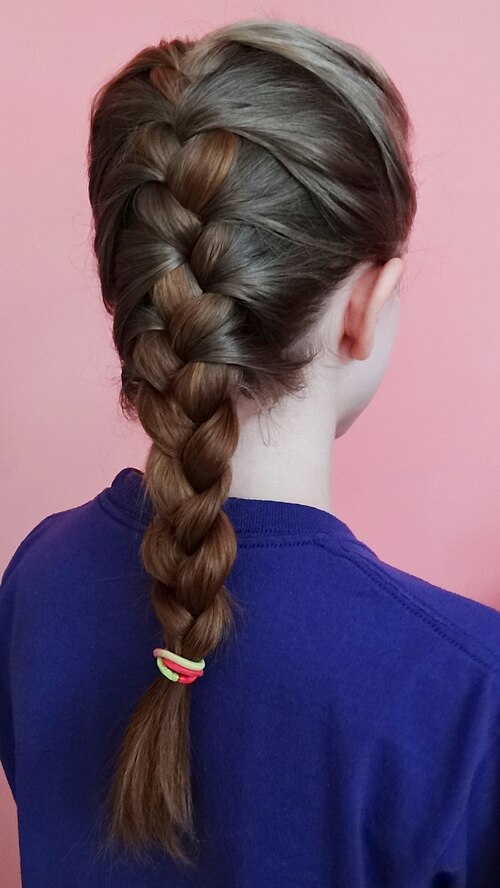
フレンチブレイド(フレンチブレードとも呼ばれる)は、編み込みヘアスタイルの一種です。この三つ編みは、頭頂部からうなじにかけて三つの毛束を編み込んだものです。
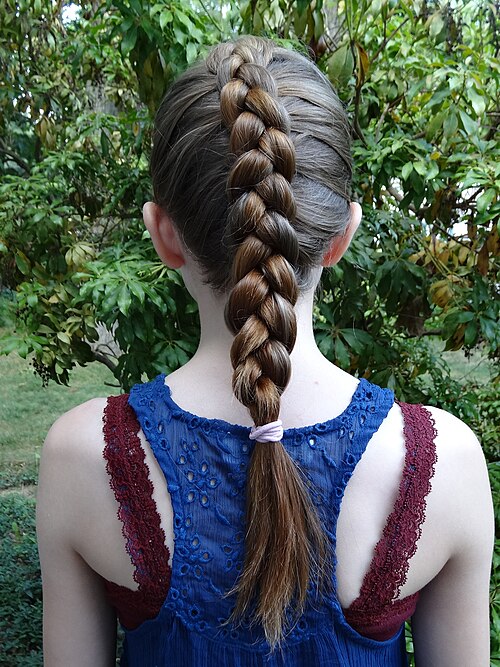
最もシンプルな三つ編みでは、まず髪全体を3つの束に分け、頭皮付近で同時にまとめます。一方、フレンチブレイドは、頭頂部付近の3つの小さな束から始め、首の後ろに向かって編み込んでいきます。このとき、各束に徐々に髪を加えながら、横から中央へと編み進めていきます。最終的には、すべての髪が頭皮全体に滑らかに編み込まれたパターンになります。
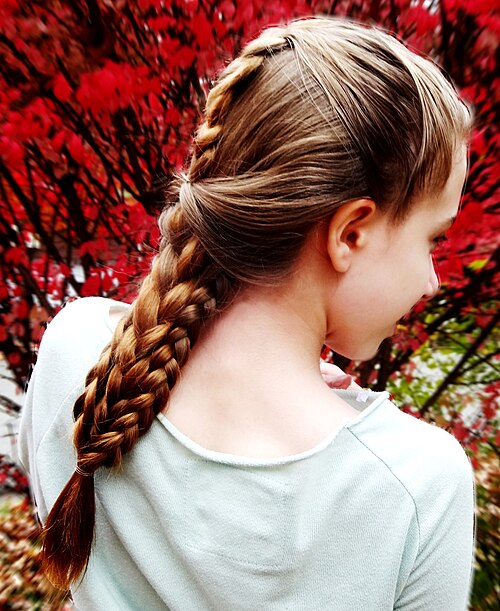
髪の毛の塊を頭皮に沿って2つ以上のセクションに分け、それぞれを別々にしておくと、複数のフレンチブレイドを、それぞれ別のセクションに作ることができます。髪の長さは編みやすさに影響します。短い髪はより難しくなります。短い髪や、さまざまなレイヤーのある髪を編むときは、フレンチブレイドのすべての髪を所定の位置に固定するために、ヘアピンが役立ちます。フレンチブレイドにはさまざまな方法があり、それぞれが個性的です。たとえば、斜めに編んだり、お団子に編んだり、前髪だけを編んだりすることができます。
最もシンプルな三つ編みと比べて、フレンチブレイドにはいくつかの実用的な利点があります。首の後ろまで届かないほど短い頭頂部の髪をまとめることができ、三つ編みの重さと張力を頭皮のより広い範囲に分散させることができます。その滑らかな見た目は、しばしばエレガントで洗練された印象を与えます。フレンチブレイドは、その複雑さゆえに、シンプルな三つ編みよりも編むのが難しいです。自分の髪に編む場合は、頭の後ろで両手をより長く持ち上げておく必要があり、ほどく際に頭皮に沿ってより多くの髪が絡まります。
この編み方では、頭頂部から始めて毛先まで編みます。この方法での編み方はさまざまな編み方でできますが、最も人気があるのはクラシックブレイドとフィッシュテールブレイドです。[ 1 ]フレンチブレイドの姉妹編はスパニッシュブレイドです。スパニッシュブレイドはフレンチブレイドに似ていますが、最初に3つの毛束を取る代わりに、2つの毛束だけを使用します。
The phrase "French braid" appears in an 1871 issue of Arthur's Home Magazine, used in a piece of short fiction ("Our New Congressman" by March Westland) that describes it as a new hairstyle ("do up your hair in that new French braid").[2] However, no visual illustrations are provided for that context, making it impossible to tell whether it refers to the same hairstyle described above.
Variations on this hairstyle include:
 Media related to French braid at Wikimedia Commons
 The dictionary definition of french braid at Wiktionary