
Loading article…
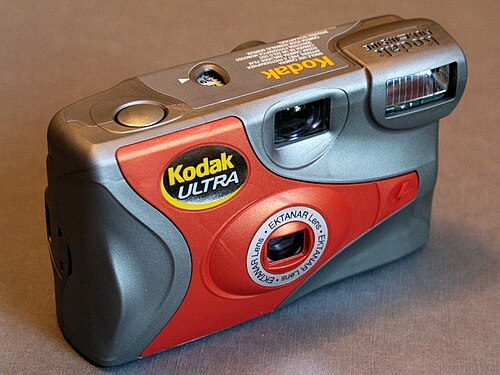
使い捨てカメラとは、フィルムがあらかじめ装填された状態で販売されるシンプルなフィルムカメラのことです。従来のカメラとは異なり、使い捨てカメラはカメラ本体ごと返却されることを前提としており、カメラ本体は廃棄され、現像済みのフィルムのみが顧客に返却されます。
一般的に、使い捨てカメラの操作機能は非常に限られており、フォーカス、ズーム、絞り、シャッタースピードを制御することはできません。照明を補助するために、ほとんどの機種には内蔵フラッシュが搭載されています。内部的には、現代の使い捨てカメラは35mmフィルムを使用しますが 、古いモデルではAPSまたは110カートリッジフィルムも使用されていました。
使い捨てカメラの中には通常のフィルムロールが入っているものもあれば、[ 1 ]フィルムが開いたスプールに内部で巻き取られているだけのものもある。一部のカメラはリサイクルされ、フィルムが補充されて再販される。
使い捨てカメラはその性質上、結婚式などのイベントで目新しいアイテムとして扱われ、水中撮影用の防水バージョンも存在する。
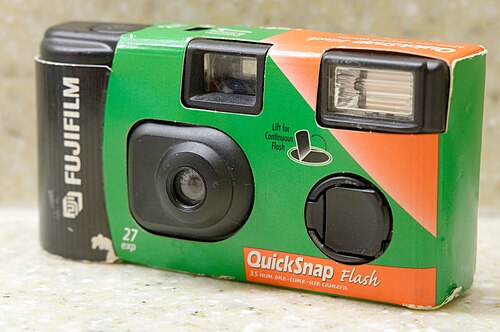
Photo-Pacという会社は1949年から、8枚撮りのフィルムを郵送して現像してもらう段ボール製のカメラを製造していました。カメラは高価で、写真撮影のチャンスが訪れたときには、安全のために家に置いておくことが多かったのです。写真撮影のチャンスを逃すことに不満を感じていたHM Stilesは、高価な精密フィルム搬送機構を使わずに、35mmフィルムを安価なケースに収める方法を発明しました。価格は1.29米ドル(2025年換算で17.46ドル)でした。今日の使い捨てカメラと非常によく似ていましたが、Photo-Pacは市場に定着しませんでした。[ 2 ]
1966年、フランスのFEX社は「フォトパックマチック」と呼ばれる使い捨てベークライトカメラを発売した。このカメラには12枚の写真(4×4cm )が収められていた。[ 3 ]
現在よく知られている使い捨てカメラは、1986年に富士フイルムによって開発されました。同社のクイックスナップシリーズは、日本では「写ルンです」[4]として知られ、 35mmフィルムを使用していましたが、イーストマンコダックの1987年のフリングは110フィルムをベースにしていました。[ 5 ]コダックは1988年に35mmバージョンを発売し[ 6 ]、1989年には35mmバージョンをファンセーバーと改名し、110フリングの販売を終了しました。[ 7 ]
日本では、使い捨てカメラの年間販売台数は1997年に8900万台以上でピークに達した。2012年には年間販売台数が500万台未満に減少したが、2019年には900万台以上に増加した。フジカラーの「写るです」などの使い捨てカメラの人気復活は、昭和レトロの一例である。[ 8 ] [ 9 ] [ 10 ]
2026年、クイックスナップ40周年を記念して、富士フイルムは2つの新しい使い捨てモデルを発表した。クイックスナップ ブラックアンドホワイトは、ISO 400の白黒フィルム27枚がプリロードされており、内蔵フラッシュが付属していた。クイックスナップ アクティブは、ISO 800のカラーフィルムを使用し、水深約10メートルまでの水中での使用に対応した保護ハウジングを備えていた。[ 11 ] [ 12 ]
使い捨てカメラは、旅行者や世界中を旅する人々にとって、冒険の思い出を写真に残すための人気のアイテムとなっている。
1990年代後半以降、使い捨てカメラは結婚式の引き出物としてますます人気が高まっています。通常、結婚披露宴のテーブルに置かれ、ゲストがイベントの独自の視点を撮影するために使用します。より一般的には、アイボリー、ブルー、ホワイト、ゴールドなど、結婚式のテーマに合わせた色で販売されています。[ 13 ]
フィルム式使い捨てカメラ[ 14 ] [ 15 ]を含むいわゆる「事故カメラキット」は、事故後に証拠として画像を撮影するために、車両に搭載されることが増えている[ 16 ] 。電池が不要なため、例えばグローブボックスなどに長期間保管した後でも、すぐに使用できる。
They often have cheap plastic lenses, below average film quality, and fixed focal lengths. The quick ease of the 'point and shoot' method that these disposable cameras were made for make them popular with many photographers who enjoy the 'less than perfect' style these cameras provide, in a move away from digital imagery,[17] which can also be seen in the rise in popularity of 'lomography'. This has also led to a number of 'lost art' type projects where disposable cameras are left in public spaces with a message for anyone finding the camera to take some images and then post the camera back, or pass it on to another person.[18][19]
The high-voltage photo flash capacitors in some cameras are sometimes extracted and used to power devices such as coilguns,[20] stun guns, homemade Geiger counter projects[21] and "RFID zapper" EMP devices.[22]
Digital one-time-use cameras (and also digital one-time-use camcorders) are available in some markets; for example the US saw the introduction of one such digital camera in 2004.[23] Digital disposables have not had the success of their film based counterparts, possibly from the expense of the process (especially compared to normal digital camera use) and the poor quality of the images compared to either a typical digital camera, or a disposable film camera. Usually, the display shows the number of shots remaining, and once this is completed, the camera is returned to the store. The digital files are then extracted from the camera, and in return for keeping the camera, they are printed out or stored to CD (or DVD in the case of the video camera [24]) for the customer. Almost all digital 'single use' cameras have been successfully hacked[25] to eliminate the need to return them to the store. The motivations for such hacking include saving money and, more commonly, the challenge of overcoming artificial impositions (such as a 25 shot limit on an internal memory that can store 100 images).
{{cite web}}: CS1メンテナンス: アーカイブサービスは非推奨になりました (リンク)