
Loading article…
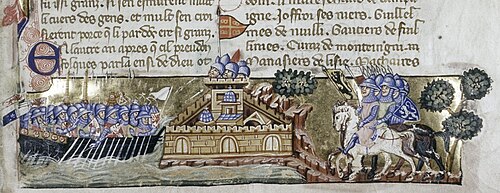
De la Conquête de Constantinople (On the Conquest of Constantinople) is the oldest surviving example of French historical prose and one of the most important sources for the Fourth Crusade. It was written by Geoffrey of Villehardouin, a knight and crusader, who was an eyewitness of the sack of Constantinople on 13 April 1204.

Villehardouin was present at the origins of the Crusade during the 1199 tournament held by Thibauld III of Champagne. Throughout the five-year crusade he acted as an envoy, an ambassador, a councilman, and even a military leader at the Battle of Adrianople in 1205. Several years later, Villehardouin took the time to write down his account.
Villehardouin chose to write his work in epic fashion. He writes his work in the third-person, and combines objectivity and ecclesiastical points-of-view. A common technique in his work is to narrate a battle or episode along subjective and even militaristic guidelines, and follow this with his personal and religious explanation of what the results were.
Villehardouin makes constant hints and references to future events and the unknowingness of the participants at this moment. He defines the outcome in his own terms and does not allow the audience to reach their own conclusion for the actions of the participants. He recapitulates the events leading to Alexis's negotiations with the Crusaders. Compare this to Robert de Clari's account of the Fourth Crusade.
His Crusade is more than just a Holy War, it is an event of such great magnitude that he must recapture it within his work in lengthy detail and describe the actors. Villehardouin describes the Doge of Venice (Enrico Dandolo) as a blind man who valiantly leads his men into battle. Contemporary studies are undecided but lean towards this man being only short-sighted or having poor eyesight. He makes many references to The Song of Roland. Much like this earlier epic, Villehardouin describes the French Army as elected to execute God's will. When Villehardouin describes how Count Louis refuses to leave the field, there is a clear reference to the functions of Roland's climax in his epic.
ヴィルアルドゥアンの言葉は、正確な部分もあればそうでない部分もあるものの、第四回十字軍の生々しい個人的な記録となっている。ヴィルアルドゥアンは冒頭で自身が巡礼者であることを述べているが、十字軍のこの原則については一切説明していない。また、第四回十字軍の起源におけるヌイイのフルクの影響についても触れられていない。ヴィルアルドゥアンは単に自身の活動の成功について報告しているに過ぎない。
本書の中で誤解を招く部分の一つは、ヴィルアルドゥアンが使節団と交渉について述べている箇所で、これが第四回十字軍の中心港としてヴェネツィアが選ばれた経緯につながった。多くの歴史家は、ヴィルアルドゥアンによる兵士と馬の必要数の計算を、騎士道精神とキリスト教的理想主義が結びついたものだと評している。ヴィルアルドゥアンは、実際にはヴェネツィア人が出し抜かれたのだと主張しているが、計算が過剰だった(計画では33,000人以上が集まったが、実際に集まったのは11,000人だけだった)。ヴィルアルドゥアンは、十字軍が他の港から出発する可能性にも注意を促している。
ヴィルアルドゥアンはザラの公会議を詳細に描写することで、十字軍のこの部分に対する否定的な見方を提示している。彼はザラの市民が十字軍にキリスト教徒の都市を攻撃しないよう懇願した様子を描写し、十字軍による略奪行為を偏りなく描写している。また、フランス軍はザラを攻撃せず、多くのフランス人が十字軍から離脱したことも指摘している。この姿勢はコンスタンティノープル包囲戦の描写にも引き継がれている。彼は十字軍の行為に憤慨し、破壊と略奪を描写している。コンスタンティノープルには世界の他の地域を合わせたに匹敵する貴重な古代遺物があったと彼は主張する。本書全体を通して、ヴィルアルドゥアンは歴史とギリシャ文化に対する深い理解を示しており、より包括的な視点を提供している。
『征服論』の主要な写本は 6 つある。[ 1 ]慣例的な記号で表すと次のようになる。[ 2 ]
これらの写本は通常、I (AO) と II (BCDE) の 2 つのグループに分類され、I の方が古く、テキスト的に価値が高い。[ 3 ]グループ I に属し、現在は失われている別の写本は、1541 年に大使フランチェスコ・コンタリーニによってヴェネツィアにもたらされた。コンタリーニ写本からジョヴァンニ・バッティスタ・ラムージオによってイタリア語に逐語訳され、現在ヴェネツィアの国立マルチャーナ図書館に Cod. Marc. it. VII 138 (8749) と Cod. Marc. it. VII 139 (8324) の 2 つの写本として残っている。[ 4 ]
クロニクル紙の冒頭部分を以下に引用します。
Sachiez que mille cent quatre-vinz et dix huit ans après l'ination nostre seingnor Jésus Christ、al tens Innocent trois、apostoille de Rome、et Philippe、roi de France、et Richard、roi d'Angleterre、ot un saint home en France qui ot nom Folques de Nuilli。ラニー・ソール・マルヌとパリのCil Nuillis siet entre。 e il ère prestre et tenoit la paroiche de la ville.フランスの人々は、フランスの人々に会いに来て、フランスの人々に奇跡を起こしてください。
Sachiez que la renommée de cil saint home alla tant qu'elle vint a l'apostoille de Rome、イノセント。フランスのポストイユ使節は、権威ある生産者としての役割を果たします。 Et après y envoia un suen Cardonal、maistre Perron de Chappes、croisié、et manda par luy le pardon tel Come vos dirai: Tuit cil qui se croisieroient et feroient le service Dieu un an l'ost、seroient quittes de toz les péchiez que il avoient faiz、dont il seroientコンフェ。グランツ氏は、さまざまな問題を解決できるよう、恩赦を与えてください。あなたの許してください。
翻訳すると:[ 5 ]
主イエス・キリストの受肉から1197年後、ローマ教皇インノケンティウス1世、フランス王フィリップ2世、イングランド王リチャード2世の時代に、フランスにヌイイのフルクという聖人がいました。ヌイイはラニ=シュル=マルヌとパリの間にある村で、彼は司祭であり、村の牧師を務めていました。このフルクはイル=ド=フランス地方とその周辺の国々で神について語り始め、主は彼を通して多くの奇跡を起こされたことを、皆さんは知っておくべきです。
さらに、この聖人の名声はローマ教皇インノケンティウスの耳にも届き、教皇はフランスに使者を送り、その権威によって十字架(十字軍)を説くよう命じました。その後、教皇は自ら十字架を担った枢機卿ペトロ・ディ・カプアを派遣し、私が今お伝えする免罪符、すなわち、十字架を担い一年間聖体拝領に仕える者は、告解で告白したすべての罪から解放されるという免罪符を布告させました。この免罪符があまりにも大きかったため、人々の心は深く感動し、多くの人々がその赦しの偉大さゆえに十字架を担いました。