
Loading article…
The Criminal Investigation Department (CID) in the Irish Free State was an armed, plain-clothedcounter-insurgency police unit that operated during the Irish Civil War. It was organised separately from the unarmed Civic Guard police force. The unit was formed shortly after the truce with the British (11 July 1921)[1] and disbanded in October 1923.
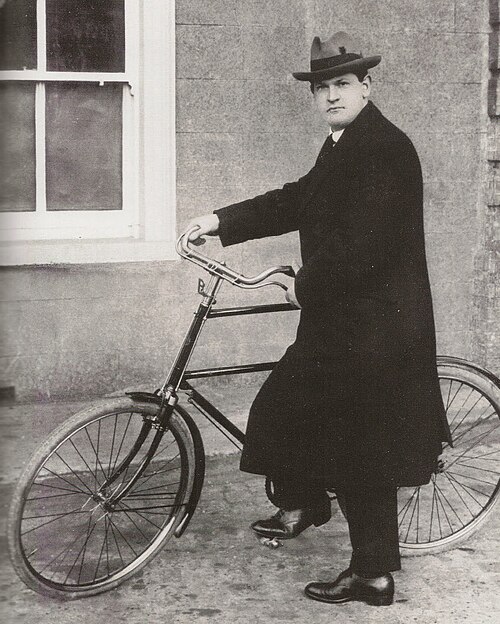
The CID was created by Michael Collins and many of its personnel were former Irish Republican Army fighters whom he had commanded during the Irish War of Independence. In particular, a number came from the Squad, a Dublin-based IRA assassination unit under Collins' command. The unit had close links with the Army Intelligence and with a smaller "Protective Corps" which was based in the same building, Oriel House on Westland Row, Dublin. Initially, they were put under the command of Liam Tobin. On 31 July 1922, it was taken out of the control of military intelligence and put under the brief of TDJoseph McGrath. Its commanding officer was Captain Pat Moynihan. Moynihan was given a temporary transfer from his post as Head of Military Intelligence and with the rank of Captain took over Oriel House for this new force.
On 22 August 1922 (the same day as Collins' death in an ambush), the Criminal Investigation Department was officially formed to "be distinct from existing police forces with separate headquarters under the direct control of the Minister for Home Affairs." It was formed from members of the National Army and the Irish Republican Police and was based at Oriel House. It consisted of over 100 heavily armed men and three women detectives who were "cloaked" as typists and "engaged in special duties connected with the detection of women engaged in hostilities against the Government." The unit later reached a peak strength of 350 in February 1923.
モイニハンはピーター・エニスを「警視正」に選んだ。エニスは1919年から1921年の戦争中、ダブリンのアイルランド共和警察の指揮官であり、自由国国民軍のトム・エニス将軍の弟だった。エニスはかつての共和警察の約15人をオリエル・ハウスに連れてきて、彼らが新しい「CID」の中核を形成した。当初は軍事組織になる予定だったが、1922年の「兵士」たちは1923年の解散までに「刑事」になった。DMP「G」支部のブロイ、ネリガン、マクナマラは当初そこにいたが、全員が国民軍情報部で高位になり、代わりに本部が置かれていたウェリントン兵舎に行った[ 2 ]。
1922年から1923年にかけての紛争中、CIDは500人以上の反条約派IRA戦闘員の逮捕、および多数の武器と文書の押収を担当した。また、2,500人以上の共和派容疑者に関するファイルを保有していた。
また、残忍な尋問手法を用いたことや、共和派の容疑者や囚人を暗殺したことでも非難された。
CIDが関与した多数の事件の中には、1922年8月26日と29日に発生した2件の別々の事件で5人の共和主義者が殺害され、遺体がドラムコンドラとクロンダーキン郊外に遺棄された事件も含まれていた。9月9日までに、英国情報部は、CIDがダブリンで「多数の著名な共和主義者を殺害した」とみられると報告した。戦争中、ダブリン地域では、私服の男たちによる反条約活動家の殺害が他にも多数発生しており、例えば1923年3月のボビー・ボンドフィールドや同年7月のノエル・レマスなどが挙げられる。共和主義の重鎮トーマス・デリッグも、CIDの拘留中に片目を撃たれた。
しかし、これらの殺害の一部は、国民軍の一部や兵士、刑事捜査局員などの他の機関によって実行されたものの、一般には「オリエル・ハウス」の仕業とされている可能性もある。ブライアン・オヒギンズは著書『22年の男たちへの敬礼』の中で、ダブリン地域だけで少なくとも25人の共和派が殺害されたことを記録している。紛争全体では、153人もの共和派捕虜が戦場で即決処刑された。[ 3 ](参照:アイルランド内戦中の処刑)
この時期の研究は、「オリエル・ハウスは、諜報活動の巧妙さと効率性によってではなく、反対者に恐怖を与えるというより直接的な方法によって、ダブリン地域の小規模な共和主義活動を鎮圧するという任務に成功した」と結論付けている。[ 4 ]
A total of four CID personnel were killed in the war. A number of attempts were also made to blow up Oriel House itself.
On 29 October 1923, the Oriel House CID was disbanded and 30 of its members were transferred to the Dublin Metropolitan Police as detectives. They later formed the basis of the Garda Special Branch. The CID as a whole was considered unsuitable for the police force in peacetime. In April 1925 the DMP was amalgamated with the Garda Síochána.