Businesses Affecting Public Morals Regulation Act | japedia.wiki
Businesses Affecting Public Morals Regulation Act
J
Japedia 編集部
|更新日: 2026年7月28日
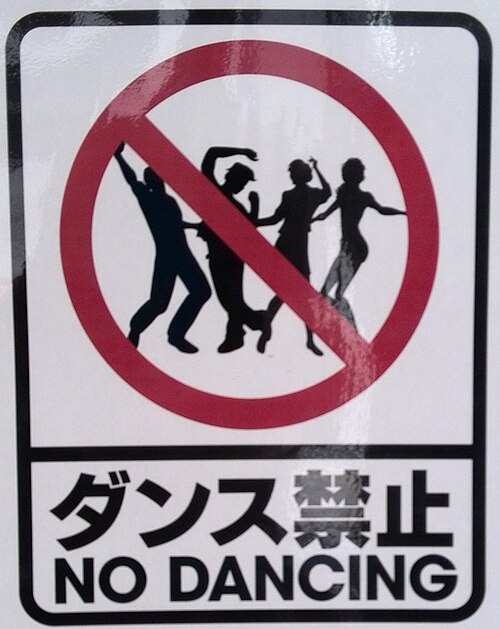
"No dancing" sign in a bar in Tokyo
The Businesses Affecting Public Morals Regulation Law (風俗営業等の規制及び業務の適正化等に関する法律, Fūzoku eigyō tō no kisei oyobi gyōmu no tekiseika tō ni kansuru hōritsu), also known as 風俗営業取締法 (Fūzoku eigyō torishimari hō) or 風営法 (Fūeihō),[1] is a law that regulates entertainment places in Japan.
History
1948: Creation of the law.
April 1, 1959: Name change.
August 14, 1984: Extension to some businesses before midnight.
April 1998: Extension to some massage businesses and adult videos transmission by Internet.
November 2005: Penal regulation enforcement, various new rules.[2]
October 2014: Regulations on dancing are lifted.[3]
January 2015: Proposition to relax the law is rejected.[4]
Effective 2016 the law will be relaxed, allowing permits for exceptions as long as certain conditions are met including lighting and not operating near residential areas.[5]
Category 3: Business where customers can eat and dance.
Category 4: Dance hall.
At first this covered dance schools too. Dance schools were removed from this category in 1998 after the movie Shall We Dance? made ballroom dance popular.