
Loading article…
The Tokyo Institute of Technology (東京工業大学)[b] was a public university in Meguro, Tokyo, Japan. It merged with Tokyo Medical and Dental University to form the Institute of Science Tokyo on 1 October 2024.
The Tokyo Institute of Technology was a Designated National University and a Top Type university of Top Global University Project designated by the Japanese government. Tokyo Tech's main campus was located at Ōokayama on the boundary of Meguro and Ota, with its main entrance facing the Ōokayama Station. Other campuses are located in Suzukakedai and Tamachi. Tokyo Tech was organised into 6 schools, within which there are over 40 departments and research centres.[1] Tokyo Tech enrolled 4,734 undergraduates and 1,464 graduate students for 2015–2016.[2]
Tokyo Institute of Technology was founded by the government of Japan as the Tokyo Vocational School on May 26, 1881,[3] 14 years after the Meiji Restoration. To accomplish the quick catch-up to the West, the government expected this school to cultivate new modernized craftsmen and engineers. In 1890, it was renamed "Tokyo Technical School". In 1901, it changed name to "Tokyo Higher Technical School".
創立当初、学校は旧将軍時代から多くの職人の工房があった大東京圏東部の蔵前に位置していました。蔵前キャンパスの建物は1923年の関東大震災で破壊されました。翌年、東京高等工業学校は蔵前から現在の大東京圏南部郊外の大岡山に移転しました。1929年、学校は東京工科大学となり、後に1946年頃に東京工業大学に改称され[ 4 ] 、国立大学の地位を獲得し、学位を授与できるようになりました。大学には1934年に建築材料研究所があり、5年後には資源利用研究所と精密機械研究所が建設されました。1943年にはセラミック産業研究所が設立され、第二次世界大戦終戦の1年前には燃料科学研究所と電子工学研究所が設立されました。
第二次世界大戦後、1949年に国立学校設立法によって新しい教育制度が公布され、東京工業大学は再編されました。同年、工学部が開設され、多くの3年制課程が4年制課程に変更されました。1953年には工学系の大学院課程が開設されました。翌年には、6つの研究室が統合され、建築材料研究所、資源利用研究所、精密知能研究所、セラミック産業研究所の4つの新しい研究所に再編され、工学部は理工学部と改称されました。[ 5 ]
1950年代の戦後復興期、1960年代の高度経済成長期、そして1980年代のバブル経済へと向かう積極的な経済時代を通して、東京工業大学は日本を代表するエンジニア、研究者、ビジネスパーソンを輩出し続けてきた。2004年4月以降、国立大学全体に適用される新法[ 6 ]に基づき、東京工業大学として半民営化されている。
東京工業大学は、世界最高水準のスーパーコンピュータ「つばめ2.0」 [ 7 ]を運用し、高温超伝導で画期的な成果を上げたことから、スーパーコンピュータ技術と凝縮系物質研究の世界的中心地であった。
2011年に創立130周年を祝いました。[ 8 ] 2014年にはedXコンソーシアムに加わり、オンライン教育開発オフィス(OEDO)[ 9 ]を設立し、 edXウェブサイトでホストされているMOOCを作成しました。[ 10 ]
東京工業大学は創立130年の間に、科学研究者、技術者、そして元首相の菅直人氏をはじめとする多くの社会指導者を輩出してきた。
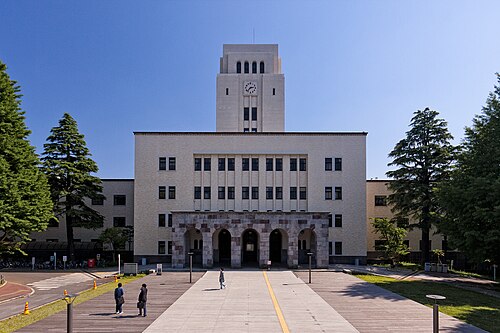
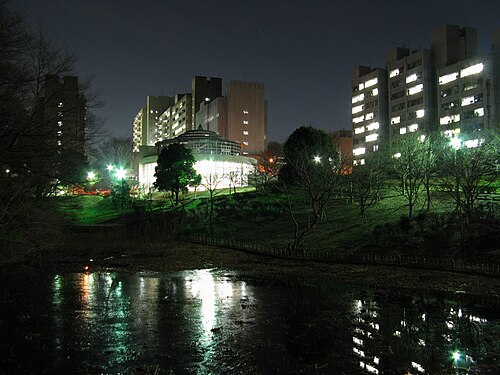
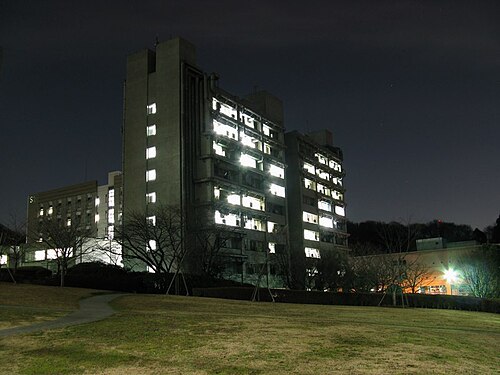
東京工業大学には3つのキャンパスがあり、メインキャンパスは目黒区大岡山にある大岡山キャンパス、その他に芝浦にある田町キャンパス、横浜市緑区長津田にある鈴掛台キャンパスがあります。
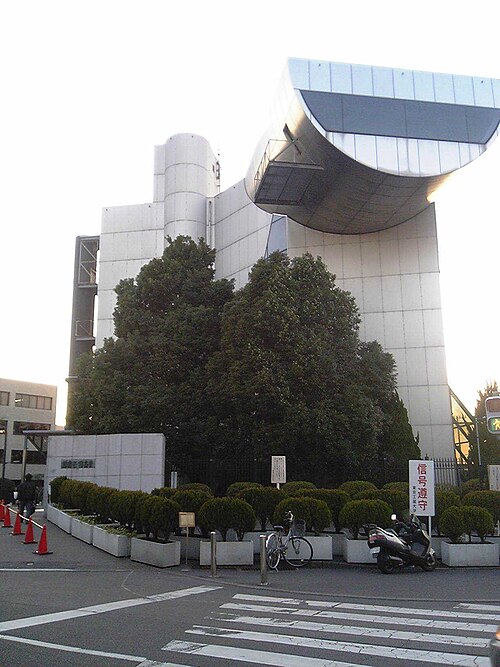
東京工業大学は6つの学部、多数の学科、および教養学部から構成されている。[ 11 ]
メイン図書館は、大岡山にある東京工業大学図書館でした。ここは日本最大の科学技術図書館の本拠地でした。図書館は1882年に設立され[ 13 ] 、1923年の関東大震災で約28,000冊の本を失いました。1936年に大岡山に移転し、以来、日本の国立科学技術図書館となっています。
1,200 students and staff visit the library each day. It has 674,000 books and 2,500 journals, including 1,600 foreign academic journals; the number of international research collections was the largest in Japan. It provides around 7,000 registered electronic journals each year. The library was therefore recognised for the outstanding national and international importance and awarded 'Centre of foreign journals' by the government of Japan. Renewal construction of the library was completed in July 2011.
Tokyo Tech runs intensive programmes for obtaining master degree or PhD. Named the Tokyo Tech's International Graduate Program, the programmes are targeted at international students of high academic potential who are not Japanese speakers. Lectures and seminars are given in English mainly by Tokyo Tech's faculty members.[14] Programme starting dates are October or April. Public fundings for these courses are also available; those students who have academic excellence may apply for scholarships from the Ministry of Education, Culture, Sports, Science and Technology of Japan.
Tokyo Tech has been ranked 2nd among the Japanese universities according to The Times Higher Education World University Rankings 2021.[24] Tokyo Tech has also ranked 3rd among the best Japanese universities according to QS World University Rankings 2021.[25] Tokyo Tech has also been ranked 2nd (national) in 2011 in the field of Engineering "Entrance score ranking of Japanese universities-Department of Engineering" by Score-navi.[26] In another ranking, Japanese prep school Kawaijuku ranked Tokyo Tech as the 4th best (overall), 2-3rd best in former semester and 1st in latter semester (Department of Engineering) university in Japan (2012).[27]
According to QS World University Rankings, Tokyo Tech was ranked 3rd in Japan and internationally ranked 20th in the field of Engineering and Technology, and 51st in Natural science in 2011.[28] The university was ranked 31st worldwide according to Global University ranking[29] and 57th in 2011 according to QS World University Rankings,[30] It was also ranked 31st worldwide according to the Global University Ranking in 2009.[29]
東京工業大学は、日本有数の自然科学・技術分野の研究機関の一つでした。トムソン・ロイターによると、その研究の卓越性(この情報では純粋科学のみ)は、特に材料科学(日本5位、世界24位)、物理学(日本5位、世界31位)、化学(日本5位、世界22位)において際立っていました。[ 31 ]
週刊ダイヤモンド誌は、東京工業大学がCOEプログラムにおける研究者一人当たりの研究資金で日本最高水準の研究水準を誇ると報じた。[ 32 ]同記事では、学生一人当たりのGP資金による教育の質でも8位にランクインしている。
さらに、2012年9月に発表されたQS世界大学ランキングの工学・技術分野の総合水準に関する調査によると、東京工業大学は世界19位、国内2位にランクインした。[ 33 ]
東京工業大学が所有していた大規模スーパーコンピュータ「つばめ2.0」は、世界最高性能のコンピュータランキングで5位にランクインした。大学所有のスーパーコンピュータとしては世界1位であり、惑星のダイナミクスや金融システムといった複雑なシステムのシミュレーションに利用された。
東京工業大学は「実践的な」研究を重視してきたため、2009年には日本の大学の中で特許取得件数(284件)で2位を獲得した。[ 34 ]
東京工業大学の卒業生は日本の産業界で大きな成功を収めている。(真に強い大学 - TSU)によると、東京工業大学の卒業生は日本国内で最も高い(1位の)就職率を獲得している。[ 35 ]
ウィークリー・エコノミスト誌の2010年のランキングとプレジデント紙の2006/10/16の記事によると、東京工業大学の卒業生は400の大企業で2番目に高い就職率を誇り、卒業生の平均給与は日本で9番目に高かった。[ 36 ] [ 37 ]パリ鉱山学校は、世界の500大企業のCEOに名を連ねる卒業生の数で、2011年に東京工業大学を世界92位にランク付けした。[ 38 ]また、ニューヨーク・タイムズ紙 の記事「就職に最も適した学生を輩出する大学ランキング2012」によると、東京工業大学は世界で14位(アジアで2位、日本で1位)にランクインした。[ 39 ]
Tokyo Tech was one of the most selective universities in Japan. Its entrance examinations are usually considered one of the most difficult in Japan.[40][41]
As of 2009, there was a large population of rose-ringed parakeets residing at the main campus of the Tokyo Institute of Technology in Ookayama.[51][52][53]
{{cite web}}: CS1 maint: archived copy as title (link){{cite web}}: CS1 maint: archived copy as title (link)北緯35度36分18秒、東経139度41分2秒/北緯35.60500度、東経139.68389度/北緯35.60500度、東経139.68389度