
Loading article…
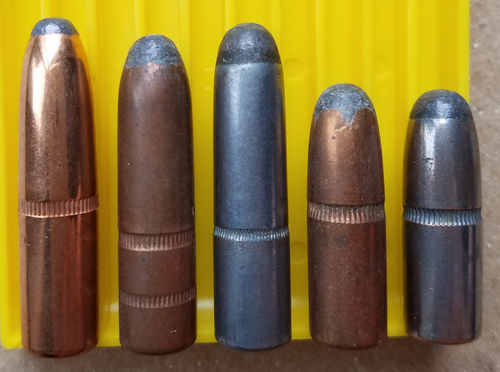

ソフトポイント弾(SP )は、ソフトノーズ弾とも呼ばれ、柔らかい金属の芯が、先端が開いたままのより強い金属のジャケットで覆われた、ジャケット付き拡張弾です。ソフトポイント弾は、肉に当たると拡張して、弾丸の直径よりも大きな傷口の直径を引き起こすように設計されています。ジャケット付きソフトポイント弾は、弾薬および再装填業界では通常JSPと略されます。戦争でソフトポイント弾を使用することは、1899年のハーグ条約第IV条第3項に違反します。 [ 1 ]
火薬銃で使用される鉛合金弾は、コルダイトなどのニトロセルロース推進剤を装填したライフル銃で得られる弾速では不十分でした。19 世紀後半には、鉛合金弾は、より強度のある軟鋼またはニッケルや亜鉛を合金化した銅のジャケットで覆われ、ライフル銃身内で確実に安定した回転を与えるようになりました。鉛合金の芯は、芯の前部と側面を覆うより強度のある金属のカップに圧着され、弾丸の底部には芯の一部が露出したままになります。弾丸のジャケットは、金属エンベロープ、鋼鉄エンベロープ、または硬質エンベロープと表現でき、ジャケット付き弾丸は、金属被覆、金属パッチ、または金属ケースと表現できます。 [ 2 ] しかし、これらの新しいタイプの弾丸は新しい高速で安定しやすくなりましたが、新しいジャケット付き設計は、それ以前のより柔らかい鉛合金タイプよりも実際には殺傷力が低いことがわかりました。
The jacketed bullets were typically of smaller diameter than the previous lead-alloy type, and the stronger jacket made them less likely to be deformed on impact. Such deformation increases the effective diameter of the projectile and can also cause an erratic trajectory within the wound. Enclosing the lead or alloy within a hard jacket cuts down on these tendencies despite the greater velocities employed, and this in conjunction with the typically smaller calibre created a greater tendency for the new rifle bullets both to create a smaller wound and to pass through, rather than lodging within, the anatomy of the target whether human or animal, thus increasing the probability of wounding rather than killing. For this reason, full metal jacket rounds are considered more humane for military purposes; conversely, they are less effective for hunting animals where killing the quarry swiftly is the objective. To produce a smokeless-propellant round that would engage in rifling efficiently but also match or exceed the lethality of the old, low-velocity ammunition it was necessary to invent the soft-point. The process was not difficult: reversing the direction of jacket placement leaves the lead-alloy core exposed at the forward tip of the projectile creating a soft-point bullet.[2]
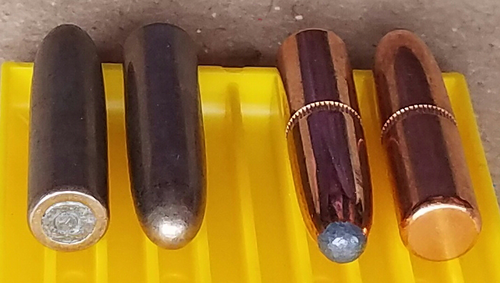
ソフトポイント弾は、標的に命中した際に変形しやすい弾頭の先端部分に、柔らかい鉛合金の芯を露出させています。弾頭の側面はジャケットで覆われているため、ライフリングによる回転を確実に安定させることができます。ソフトポイント弾の膨張は、鉛合金芯の硬度、周囲の金属ジャケットの強度、および弾頭が標的の抵抗に遭遇した際の弾速の低下から得られるエネルギーに依存します。純鉛の芯は、アンチモンやスズなどの金属と合金化した鉛の芯よりも柔らかいです。ジャケットの合金によっては、引張強度が他の合金よりも高いものがあり、また、特定の合金と焼きなまし処理においては、厚いジャケットの方が薄いジャケットよりも強度が高くなります。弾頭を膨張させるために利用できるエネルギーは、弾頭が標的に命中する速度の二乗に比例します。弾頭が標的を貫通した場合、弾頭の速度の二乗で表されるエネルギーは標的に影響を与えません。ソフトポイント弾は、低速で標的に命中した場合、または標的が弾丸を十分に減速させて露出した先端を変形させたり周囲のジャケットを破裂させたりしない場合、膨張しない可能性がある。[ 2 ]
薄いジャケットを持つ害獣駆除用ライフル弾は、最小限の抵抗に遭遇すると急速に膨張して崩壊するように設計されています。大型獣狩猟用の弾丸は、内部臓器を損傷して急速な死を引き起こすほど深く貫通するために、形状を維持したまま前方の直径が増加するように設計されています。大型獣用弾丸には、膨張するように設計された前方のコアと、形状を維持するように設計された別のコアの間に中央のバッフルを含む特殊なジャケットが付いている場合があります。別の設計には、弾丸の中央部分の周囲に膨張に抵抗するように設計された内側の厚いベルトを持つジャケットがあり、弾丸ジャケットの薄い前方部分が破裂します。弾丸の前方部分に軟質合金で形成されたコアがあり、弾丸の後部に硬い合金のコアが接合されているものもあります。また、弾丸の底部付近が厚く、軟質の先端に隣接する薄い縁に向かって先細りになっているジャケットを持つものもあります。[ 2 ]
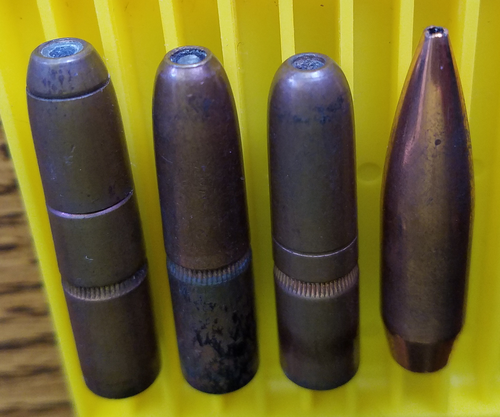
Soft-point bullets are similar to jacketed hollow-point bullets, because each has a jacket open on the forward tip. The soft core is exposed forward of the jacket on soft-point bullets, while the jacket may extend forward of the core on hollow-point bullets emphasizing aerodynamic improvement rather than expansion. Bullets with a large amount of core exposed forward of the jacket might have a hollow point within that core; and some hollow-point bullets have no jackets.[2]

Jacketed flat point (JFP) may describe either soft-point or full metal jacket bullets with a flat, rather than a rounded front. Until recently, flat-point bullets were required in centerfire rifles with tubular magazines, such as Winchester rifles, where the rounds are stored front-to-back. Use of metal-pointed bullets in these rifles can be highly dangerous, as the point of the bullet will rest against the primer of the round in front of it and can cause a detonation under the force of recoil. Since late 2005,[3] newer bullet designs with polymer tips offering improved ballistics have become available for safe use in tubular magazine rifles.[4]