
Loading article…
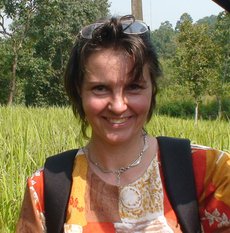
ノラ・ノフケはドイツ人の地質学者で、米国バージニア州ノーフォークにあるオールド・ドミニオン大学海洋地球科学科の教授です。ノフケの研究は、砕屑堆積物が優勢な現代の水生環境におけるバイオフィルム形成堆積構造の堆積学に焦点を当てています。このような構造は化石記録にも見られます。彼女の研究は、堆積学と微生物学、地球化学、鉱物学を組み合わせた学際的なものです。[ 1 ]
ノフケの化石への興味は、彼女が幼い頃に両親とドイツのシュヴェービッシェ・アルプ山脈でハイキングをしていたことに端を発している。その地域は化石が豊富で、それが彼女の古生物学と地質学の分野での生涯のキャリアへの道を開いた。[ 2 ]
ノフケはドイツのテュービンゲン大学で地質学・古生物学の学士号と修士号(卒業証書)を取得しました。卒業論文の指導教官はドルフ・ザイラッハーでした。二人はフランスのモンターニュ・ノワールの下部アレニギアン期のダイダロス・ハリなどの生痕化石の研究を行いました。 [ 3 ]ノフケはドイツのオルデンブルク大学で地球微生物学の博士号を取得し、珪砕屑堆積物中の現代の微生物マットの分野で研究を行っていた微生物学者のギゼラ・ゲルデスと共に研究を行いました。[ 3 ] 2000年、ノフケは米国に移住し、アンディ・ノールの客員研究員としてハーバード大学の生物生物学・進化部門で博士研究員を務めました。その後まもなく、彼女はバージニア州ノーフォークにあるオールド・ドミニオン大学の海洋地球科学科の堆積学教授に就任した。[ 4 ]
Noffke is known for her work on microbial mats causing microbially induced sedimentary structures (MISS) in sandy deposits. Her work employs the actuopaleontological approach in the examination of the Earth's past.[1][5] MISS allow insight into past prokaryote and single-celled benthos, and the paleoenvironment and paleoclimate. Noffke discovered 17 different types of MISS that result from microbial growth and EPS-production, trapping, biostabilization, baffling, and binding. The Dresser Formation, Pilbara, Western Australia, includes some of the oldest MISS.[6] The fossil microbial mats covered clastic tidal flats, channels and pools.[7] MISS at Dinosaur Ridge, added knowledge on paleoenvironmental conditions under which the Upper Crustaceous "J" Sandstone formed, and broadened insight of track sites development.[8]
In collaboration with Gerdes, Thomas Klenke, and Wolfgang E. Krumbein, Noffke suggested a new, fifth group to Pettijohn and Potter's classification of primary sedimentary structures. They called the group bedding modified by microbial mats and biofilms, and divided it into two classes: one for those on bedding planes, and the second for those within beds.[9] The first class includes microbial wrinkle structures, mat/sand chips, erosional remnants and pockets, palimpsest/multidirectional ripple marks, shrinkage cracks and mat curls.[9] The second class, within beds, includes biolaminites, gas domes, sponge pore fabrics and fenestrae structures, as well as "microbially induced sedimentary textures (MIST) such as oriented grains, sinoidal laminae, and mat-layer-bound grain sizes.[9]
Noffke's work on microbially induced sedimentary structures (MISS) in sandy deposits is summarized in a textbook.[5] The book describes MISS as biosignatures valuable for the exploration extraterrestrial life.[10]
ノフケは、国際層序委員会の先カンブリア紀層序小委員会の委員長代理を務めており、[ 11 ]無脊椎動物古生物学論文集の原核生物編の編集者でもある。[ 12 ]ノフケは、2010 年珪砕屑性微生物マットに関する SEPM フィールド会議を組織し、ジョン・ストルツと共にゴードン研究会議:地球生物学を設立した。[ 5 ]彼女は、アメリカ地質学会 (GSA) の地球生物学および地球微生物学部門の初期の議長の 1 人であった。[ 13 ]
ノフケの科学界への貢献を称え、オーストラリアのエディアカラ紀グラントブラフ層から発見された5億5千万年前の化石群が、彼女にちなんでノフカルキス・ストラアスリイ[ 14 ](「ノフケの網」)と名付けられました。
ノフケ氏は、米国科学振興協会(AAAS)のフェローに選出された。この賞は、俳優にとってのアカデミー賞に相当する。AAASは彼女の功績を称えた。
「地球生物学の分野への画期的な貢献であり、特にこれまで認識されていなかった微生物によって誘発された堆積構造の35億年の化石記録の解明に貢献した。」[ 15 ]
彼女は最近、ワシントンD.C.地質学会の会長に選出された。
出版物
{{cite book}}: CS1メンテナンス: 場所の発行元が見つかりません (リンク)