
Loading article…
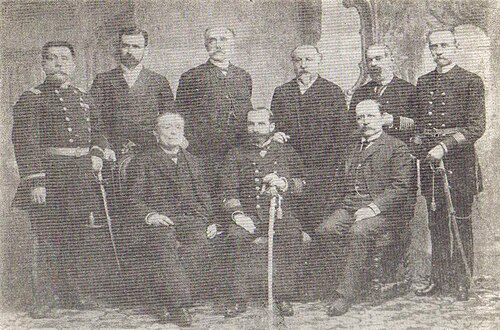
イキケ革命評議会(スペイン語: Junta Revolucionaria de Iquique)(1891年4月13日 - 1891年12月26日)は、1891年のチリ内戦の発端となった海軍の反乱の後、チリ議会とホルヘ・モント提督によって、チリ大統領ホセ・マヌエル・バルマセダの権力に挑戦するために設立された政治組織である。[ 1 ] : 190評議会は、1891年9月にバルマセダが敗北し自殺した後、ホルヘ・モント提督が新大統領として権力を掌握するまで、国を統治した。[ 1 ] : 191
国民議会と大統領の間では、それぞれの憲法上の権限の範囲をめぐって長らく対立がくすぶっていた。1891年1月、この対立は大統領軍と議会軍の間で勃発した1891年チリ内戦へと発展した。ホセ・マヌエル・バルマセダ大統領は正規軍と海軍の一部に支えられていた。海軍の大部分はホルヘ・モント大佐の指揮下で議会軍を支持した。エミル・コルネル将軍と共に議会軍を率いたモント大佐は北部諸州を占領し、イキケ市に並行政府を組織した。そこで彼らは軍隊を編成し、最終的に南部へ移動させて大統領軍と戦った。

The Revolutionary Junta, created on April 13, had little direct political participation, since almost all its effort was focused on the military effort. Firmly established in Iquique prosecuted the war vigorously, and by the end of April the whole area was in the hands of the "rebels" from the Peruvian border to the outposts of the Balmacedists at Coquimbo and La Serena. The Junta now began the formation of a properly organized army for the next campaign, which, it was believed universally on both sides, would be directed against Coquimbo. The necessary arms and ammunition were arranged for in Europe; they were shipped in a British vessel, and transferred to a Chilean steamer at Fortune Bay, in Tierra del Fuego, close to the Straits of Magellan and the Falkland Islands, and thence carried to Iquique, where they were safely disembarked early in July 1891. A force of 10,000 men was now raised by the junta, and preparations were rapidly pushed forward for a move to the south with the object of attacking Valparaiso and Santiago, because in a few months the arrival of the new ships from Europe would reopen the struggle for command of the sea so the Congressional party could no longer aim at a methodical conquest of successive provinces, but was compelled to attempt to crush the dictator at a blow.
After his forces were overcome, Balmaceda fled to the Argentinian embassy where he stayed for one month, then committed suicide rather than surrender to the new government. The Government Junta took control from General Manuel Baquedano, who had succeeded President Balmaceda in order to avoid the continuance of hostilities, and ruled until new elections were held, that elected Captain Montt as new President.