
Loading article…
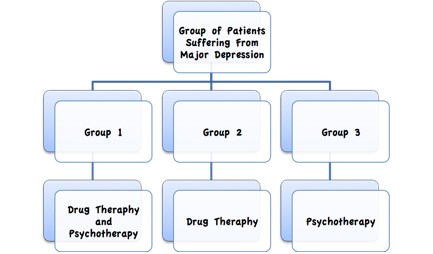
実験計画法において、群間デザインとは、 2つ以上の被験者グループをそれぞれ異なる試験因子で同時にテストする実験のことです。このデザインは通常、被験者内デザインの代わりに、あるいは場合によっては被験者内デザインと併用して用いられます。被験者内デザインは、各被験者に同じ条件のバリエーションを適用して反応を観察するものです。最も単純な群間デザインは2つのグループで構成されます。1つは一般的に処置群とみなされ、「特別な」処置(つまり、何らかの変数による処置)を受けます。もう1つは対照群で、変数による処置を受けず、参照として用いられます(処置群からの結果の逸脱が、実際に変数の直接的な結果であることを証明します)。群間デザインは、心理学、経済学、社会学の実験だけでなく、自然科学や社会科学の他のいくつかの分野でも広く用いられています。
実験バイアスを避けるため、群間比較デザインでは通常、実験盲検法が用いられます。最も一般的に用いられるのは単盲検法で、被験者が治療群または対照群のどちらに属するかを識別せずに盲検化します。単盲検実験では、通常、対照群の被験者にプラセボが投与されます。被験者と試験者の両方からのバイアスを回避するためのより確実な方法として、二重盲検法が用いられることもあります。この場合、被験者と試験者の両方が、被験者がどちらの群に属するかを知りません。二重盲検法は、観察者期待効果から実験を保護することができます。
群間比較実験デザインの利用には、いくつかの利点があります。まず、複数の変数、あるいは変数の複数の水準を同時にテストすることができ、十分な被験者数があれば、多数の被験者をテストすることが可能です。そのため、調査範囲は広がり、被験者内比較デザインのように単一の変数の影響にとどまらず、より広範な影響を検証できます。さらに、このデザインは時間を大幅に節約できるため、医療など、時間的制約のある問題に結果が役立つ場合には理想的です。
The main disadvantage with between-group designs is that they can be complex and often require a large number of participants to generate any useful and reliable data. For example, researchers testing the effectiveness of a treatment for severe depression might need two groups of twenty patients for a control and a test group. If they wanted to add another treatment to the research, they would need another group of twenty patients. The potential scale of these experiments can make between-group designs impractical due to limited resources, subjects and space.
Another major concern for between-group designs is bias. Assignment bias, observer-expectancy and subject-expectancy biases are common causes for skewed data results in between-group experiments, which can lead to false conclusions being drawn. These problems can be prevented by implementing random assignment and creating double-blind experiments whereby both the subject and experimenter are kept blind about the hypothesized effects of the experiment.
Some other disadvantages for between-group designs are generalization, individual variability and environmental factors. Whilst it is easy to try to select subjects of the same age, gender and background, this may lead to generalization issues, as you cannot then extrapolate the results to include wider groups. At the same time, the lack of homogeneity within a group due to individual variability may also produce unreliable results and obscure genuine patterns and trends. Environmental variables can also influence results and usually arise from poor research design.[1][2]
A practice effect is the outcome/performance change resulting from repeated testing. This is best described by the Power Law of Practice: If multiple levels or some other variable variation are tested repeatedly (which is the case in between-group experiments), the subjects within each sub-group become more familiarized with testing conditions, thus increasing responsiveness and performance.
Some research has been done regarding whether it is possible to design an experiment that combines within-subject design and between-group design, or if they are distinct methods. A way to design psychological experiments using both designs exists and is sometimes known as "mixed factorial design".[3] In this design setup, there are multiple variables, some classified as within-subject variables, and some classified as between-group variables.[3]
ある研究では、両方の変数を組み合わせた。これにより、実験者は被験者内変数を通して特定の個人におけるうつ病の原因を分析するとともに、グループ間変数の比較を通して2つの治療法の有効性を判断することができた。
例えば、新しいタイプの認知療法がうつ病に及ぼす影響を調べたい場合、臨床的にうつ病と診断された被験者グループにうつ病の事前検査を実施し、ランダムに2つのグループ(従来型療法グループと認知療法グループ)に割り当てます。被験者が割り当てられた条件に従って一定期間(例えば1か月)治療を受けた後、再度うつ病の測定(事後検査)を行います。このデザインは、被験者内変数(検査)が2つのレベル(事前と事後)を持ち、被験者間変数(治療)が2つのレベル(従来型と認知療法)を持つという構成になります。
別の例としては、男性15名と女性15名を対象に、参加者のアイスクリームの味の好みを調査する実験がある。
科学者グループが、チョコレート、バニラ、ストロベリー、ミントチョコレートチップのアイスクリームの中で、人々が最も好むフレーバーはどれかを調査する研究を行っています。実験には、男女半数ずつ、計30人が参加しました。各参加者は、それぞれのフレーバーをスプーン2杯ずつ試食し、最も美味しいものから最も美味しくないものまで、好みの順に並べました。実験終了後、科学者たちはデータを総合的に、また性別ごとに分析しました。その結果、バニラが参加者全員から最も好まれたフレーバーであることがわかりました。興味深いことに、男性はプレーンチョコレートよりもミントチョコレートチップを好むのに対し、女性はミントチョコレートチップよりもストロベリーを好むことがわかりました。
上記の例は、参加者が男性グループと女性グループの両方に同時に所属することはできないため、グループ間比較研究です。また、各参加者が提供された4種類のフレーバーのアイスクリームすべてを試食したため、被験者内比較研究でもあります。