
Loading article…
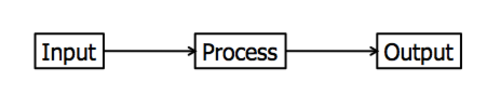
The input–process–output (IPO) model, or input-process-output pattern, is a widely used approach in systems analysis and software engineering for describing the structure of an information processing program or other process. Many introductory programming and systems analysis texts introduce this as the most basic structure for describing a process.[1][2][3][4]
A computer program is useful for another sort of process using the input-process-output model receives inputs from a user or other source, does some computations on the inputs, and returns the results of the computations.[1] In essence the system separates itself from the environment, thus defining both inputs and outputs as one united mechanism.[5] The system would divide the work into three categories:
In other words, such inputs may be materials, human resources, money or information, transformed into outputs, such as consumables, services, new information or money.
As a consequence, an input-process-output system becomes very vulnerable to misinterpretation. This is because, theoretically, it contains all the data, in regards to the environment outside the system. Yet, in practice, the environment contains a significant variety of objects that a system is unable to comprehend, as it exists outside the system's control. As a result, it is very important to understand where the boundary lies between the system and the environment, which is beyond the system's understanding. Various analysts often set their own boundaries, favoring their point of view, thus creating much confusion.[6]
The views differ, in regards to systems thinking.[4] One of such definitions would outline the Input-process-output system, as a structure, would be:
"Systems thinking is the art and science of making reliable inferences about behaviour by developing an increasingly deep understanding of the understanding of the underlying structure"[7]
あるいは、システムは遠隔の対象物と結びつくという意味で「全体的」ではないとも示唆されている(例えば、カニ、オゾン層、資本のライフサイクルを結びつけようとするなど)。[ 8 ]
情報システム文献で最もよく引用される主要なカテゴリは 5 つあります。[ 9 ] [ 10 ]
人間の干渉によって作られたものではないシステム。その例としては、太陽系や、現在の形に進化してきた人体などが挙げられる[ 9 ]。
人間の介入の結果として作成され、物理的に識別可能なシステム。その例としては、特定の目的のために人間の心によって作成されたさまざまなコンピュータマシンが挙げられる。[ 9 ]
人間の介入の結果として作られた、物理的に識別できないシステム。その例としては、特定の目的のために人間の精神によって作られた数学的システムや哲学的システムなどが挙げられる。[ 9 ]
また、人間が特定の目標を共同で達成することを可能にする社会システムもいくつか存在する。
人間によって作られ、目に見えない目的から派生したシステム。例えば、家族は人間関係の階層構造であり、本質的に自然システムと人間システムの境界を作り出している。[ 9 ]
特定の目的のために人間によって作られた階層構造を持つ組織。例えば、特定の目的を達成するために人間を組織する企業。このシステムの成果は物理的に識別可能である。[ 9 ]ただし、これまでのタイプとの間にはいくつかの重要な関連性がある。人間活動システム(HAS)の概念は、独自の発展と組織を持つさまざまな小規模な社会システムから構成されることは明らかである。さらに、HASには設計されたシステム(コンピュータや機械)が含まれる可能性がある。これまでのシステムの大部分は重複するだろう。[ 10 ]
あらゆるシステムの基本的な挙動に関して言えば、いくつかの重要な特徴が存在する。
{{cite web}}: CS1 maint: タイトルとしてアーカイブされたコピー (リンク)