
Loading article…

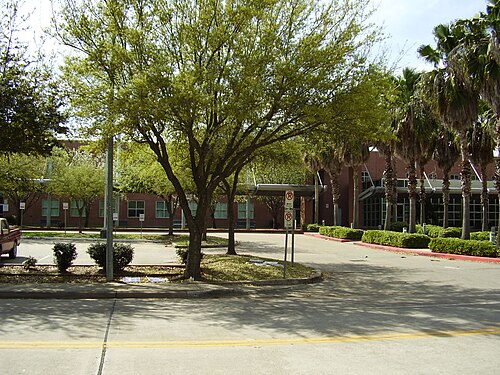
K–8 schools, elementary-middle schools, or K–8 centers are schools in the United States that enroll students from kindergarten/pre-K (age 5–6) to 8th grade (up to age 14), combining the typical elementary school (K–5/6) and junior high or middle school (6/7–8).[1][2][3]
As of 2007, many American private schools have K–8 configurations.[4]
In the late 19th century and early 20th century most American elementary schools had grades 1 through 8. The "junior high school" concept was introduced in 1909. As time passed, until the 1940s, junior high schools increased quickly.[5] The installation of junior high schools was made in order to provide more academic and social opportunities for adolescent students prior to entering high school. By the 1960s many U.S. school districts separated the elementary and junior high school levels, with seventh through ninth grade students at junior high school. As years passed, the model changed to middle schools serving grades six through eight.[4]
2007 年までに、中学校レベルでの学業成績が低い地域の一部のコミュニティでは、学業成績を向上させるために K-8 モデルに戻し始めていました。[ 4 ] 2008 年までに、多くの都市部の学校システムが中学校を K-8 学校に転換しました。K-8 学校に移行した学区には、ボルチモア市公立学校システム、シンシナティ公立学校、フィラデルフィア学区などがありました。[ 6 ] 当時、コロンビア特別区公立学校も一部の学校を K-8 に転換していました。 [ 7 ]ヒューストン クロニクルのジェニファー ラドクリフは、教師たちが「生徒が中学校への移行という混乱した年につまずかない」というシナリオが K-8 学校への転換の「最大の利点の 1 つです」と述べていると伝えました。[ 4 ]ラドクリフ氏は、専門家から「同じキャンパスに留まることで、子供たちは社会的な関係を再構築する必要がなくなり、学業に集中できる。教師は家族と強固な関係を築くことができる。その結果、保護者は中学校時代を通してキャンパスに関わり続ける可能性が高くなる」と言われたと語った。[ 4 ]ラドクリフ氏は、従来の中学校と比較して、K-8 では運動部活動や選択科目の提供能力が低下すると付け加えた。[ 4 ]
ワイルズ、ジョン(編)。成功するK-8学校の構築:校長のためのガイド。コーウィン・プレス、2009年6月10日。ISBN 1412966175、9781412966177。